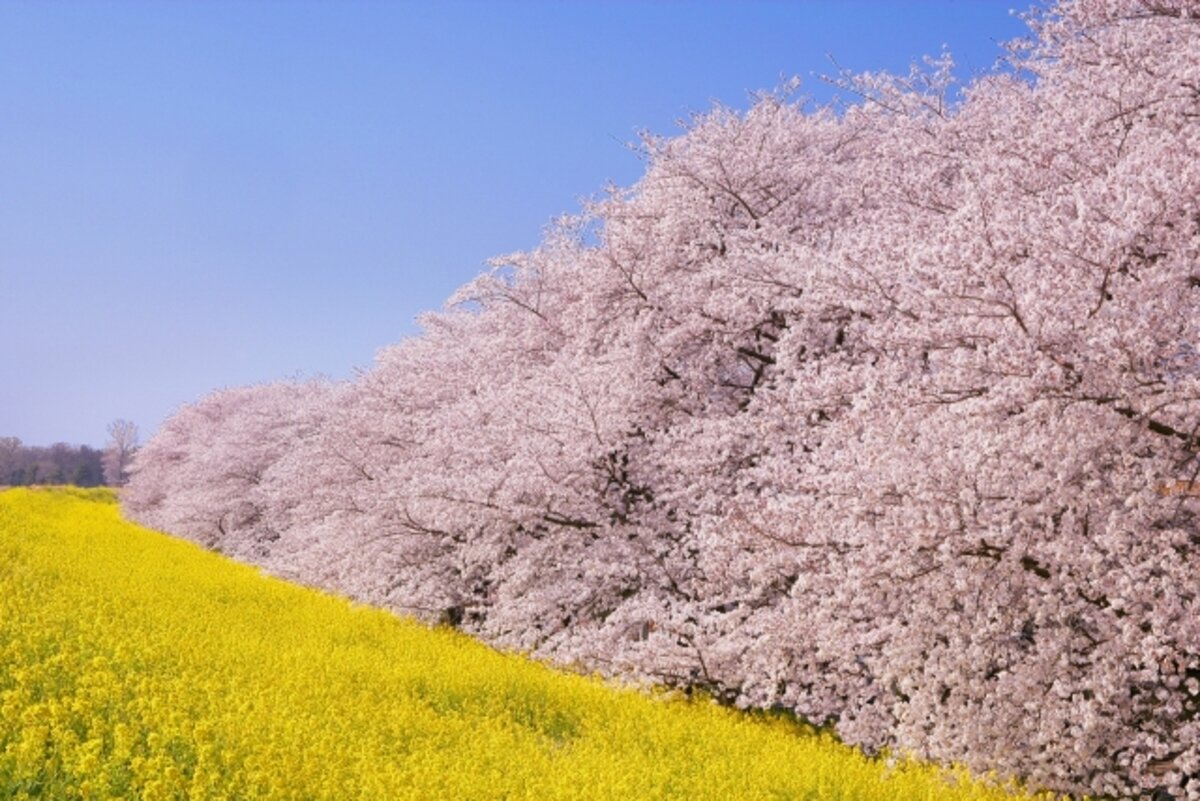
Just a little north from Tokyo, there is a place where spring spreads across the full view. Along the Arakawa River in Kumagaya City, Saitama Prefecture, the "Kumagaya Sakura Tsutsumi" features approximately 500 Somei Yoshino cherry trees stretching about 2 km along the embankment. At full bloom, a cherry blossom tunnel appears, making it one of the top hanami spots in the Kanto region. This site, cherished since the Edo period, is also selected as one of the "100 Best Cherry Blossom Spots in Japan."
The allure of this place is not just that "there are many cherry trees." There's the vastness of the sky unique to the riverbank, the color of rapeseed flowers spreading across the embankment slope (which varies year by year), the close walking distance from the station, and the atmosphere of the lanterns lit during the festival and the night cherry blossoms. By day, it’s a bright, photogenic spring; by night, it transforms into a softly floating, magical spring—the same place changes its expressions.
This article provides a comprehensive guide on what Kumagaya Sakura Tsutsumi is like, why you should enjoy cherry blossoms here, what you can do on-site, tips for visiting, access details, and even Japanese hanami cultural manners—all organized in a way that you can directly use for planning your trip.
1. What Kind of Place is Kumagaya Sakuratsutsumi?
Kumagaya Sakura Tsutsumi is a row of cherry trees maintained along the Arakawa embankment near the center of Kumagaya City. The word "embankment" might sound a bit formal, but you can imagine it as a "large riverside promenade." From the top of the embankment, you look down on the cherry trees; cherry trees line the mid-slope, with open riverbank views layered around, providing unobstructed vistas wherever you walk.
Historically, this region is known as a "cherry blossom town," and Kumagaya Sakura Tsutsumi has been recognized as a famous cherry blossom site since the Edo period. In modern times, the scenic landscape has been continually preserved, and in 1990 (Heisei 2), it was selected as one of the "100 Best Cherry Blossom Spots in Japan."
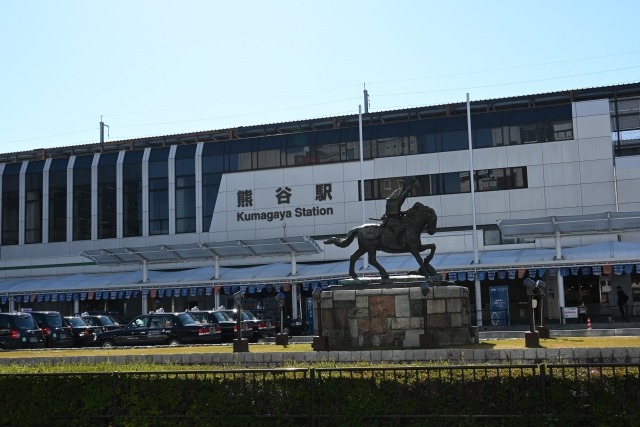
Furthermore, an important factor for travelers is "ease of access." The nearest Kumagaya Station is a transit hub served by JR Takasaki Line, Chichibu Railway, and also the Shinkansen (Joetsu and Hokuriku lines). You can walk south from the station's south exit straight ahead for about 5 minutes to reach the Sakura Tsutsumi. Few cherry blossom spots are this close to the station, making Kumagaya Sakura Tsutsumi convenient even for a short visit.
2. Reasons to Enjoy Cherry Blossoms at Kumagaya Sakura Tsutsumi
There are four main reasons why Kumagaya Sakura Tsutsumi is recommended: "the scale of the scenery," "the overlap of seasonal colors," "the variety of experiences," and "minimal travel stress." Let’s delve into each from a traveler's perspective.
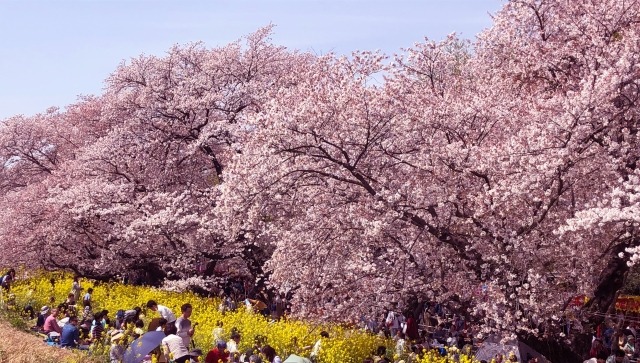
First, the scale of the scenery. Cherry trees stretch continuously for about 2 km, so it’s not just a moment of beauty but "continual beauty during a walk." For photographers, this means more compositional variety and the desire to retake shots at different times. For those who enjoy strolling, walking itself becomes an activity.
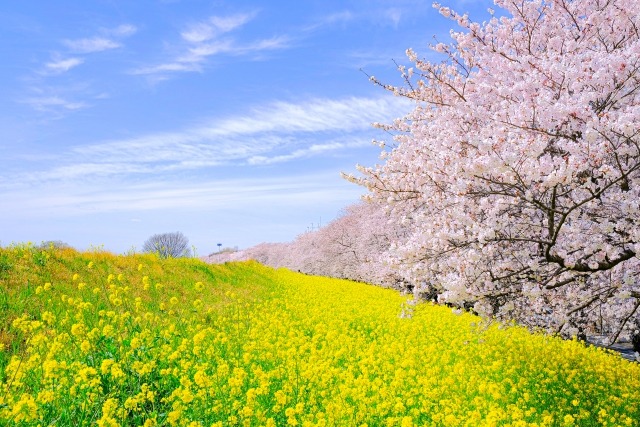
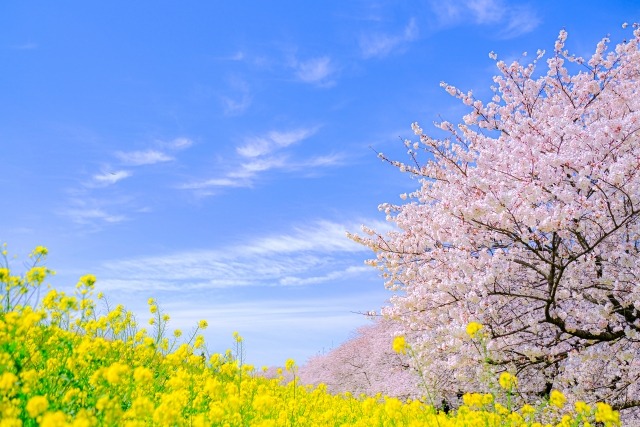
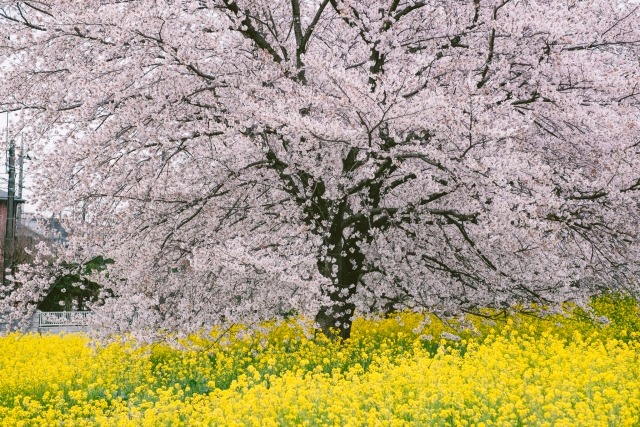
Next, the overlap of seasonal colors. The embankment has few buildings blocking sunlight, so the blue sky reflects widely on clear days. In years when rapeseed flowers bloom on the slope, the pale cherry pink and vivid yellow spread simultaneously, intensifying the feeling of spring. Having a "spring palette" beyond just cherry blossoms is a distinctive feature of Kumagaya Sakura Tsutsumi.
Third is the variety of experiences. In addition to daytime walking, during the festival period you can enjoy night cherry blossoms with lanterns and illumination. You can switch from a refreshing daytime stroll to a calm nighttime viewing, making it a spot where you can enjoy "two experiences in one place." The illumination hours are typically from 6:00 pm to 9:00 pm, though these can vary annually, so checking the latest information before departure is recommended.
Finally, minimal travel stress. Many cherry blossom spots tend to be "far from stations," "have crowded buses," or "are inconvenient without a car," but Kumagaya Sakura Tsutsumi is within walking distance from the station. Even on crowded days, the simple route of "take the train, then walk" can be organized, so even less experienced travelers can feel secure. The city also recommends public transportation use.
3. What You Can Enjoy During the Cherry Blossom Season at Kumagaya Sakura Tsutsumi
Besides "viewing" cherry blossoms, Kumagaya Sakura Tsutsumi offers various spring-exclusive ways to enjoy. Here, we introduce ways to spend time onsite by scene.
Walking Through the Cherry Blossom Tunnel
The most basic is to slowly walk along the embankment. Walking on the embankment top, you can get an overview of the cherry tree row, feeling the power of the continuous scenery. Walking on the embankment mid-slope or lower paths brings you closer to the flowers, where you can feel the branch structure and flower density physically. On sunny days, petals dance with each breeze, creating "scene changes" even over short distances.
Enjoying the Contrast of Rapeseed Flowers and Cherry Blossoms
In years when rapeseed flowers bloom, it’s fun to find spots along the walk where the yellow color looks most intense. While you can take pictures with only cherry blossoms as a background throughout Japan, wide shots capturing both cherry blossoms and rapeseed flowers together are quite rare. Especially in the afternoon light, flower colors become vivid, and combined with the blue sky, it creates a spring-like color saturation.
Festive Atmosphere at the Kumagaya Sakura Festival
Kumagaya Sakura Tsutsumi’s cherry blossoms are often linked with the "Kumagaya Sakura Festival," held from late March to early April annually. The city’s information also introduces the cherry blossom tunnel captivating people during the festival season.
The festival duration varies by year, but past announcements mention operating from 10 am to 9 pm, with food stalls, lanterns, and night illuminations.
When planning your trip, consider "festival days for enjoying the bustle" and "non-festival days for quiet walks," choosing according to your preference to enhance satisfaction.
Night Cherry Blossoms and Lantern Walk
At night, the atmosphere is a different world from daytime. The illumination doesn’t flood the entire cherry blossom area; rather, light bands appear scattered, creating depth and softly floating pale blossoms against the dark sky. For photography, stabilizing your camera is important. Night mode or tripods for smartphones improve success rates.
Also, it can get chilly at night, so dressing the same as daytime might surprise you with the temperature difference. Details on this are discussed later in the "what to bring" section.
Enjoying the "Sky" Unique to Riverbanks
Another main attraction of Kumagaya Sakura Tsutsumi is actually the "sky." The riverbank is open with few obstructions, so cloud movements are clearly visible. While cherry blossoms generally imply focusing on the trees, here the sense is stronger of framing the cherry blossoms to gaze at the sky. At sunset, the sky leans orange, turning the white flowers to a soft warm tone. If you have enough time, combining two of the three times—day, sunset, and night—allows you to bring back a fascinating experience of the same scenery looking different.
4. Tips for Visiting Kumagaya Sakura Tsutsumi
Now, let’s summarize practical points. The "timing," "what to bring," and "how to spend time on site" strongly affect your travel satisfaction. Here they are organized to help avoid mistakes.
Best Timing
The season for viewing Kumagaya Sakura Tsutsumi is usually from late March to early April.
However, cherry blossom timing shifts year to year, and impressions differ greatly between "starting to bloom," "full bloom," and "petal fall."
・For photographers, aiming for 2–3 days before or after full bloom balances density and color.
・For avoiding crowds, weekday mornings tend to be quieter.
・If you like scenes with dancing petals, the early post-full-bloom phase is recommended. Fallen petals on the ground form a "flower carpet," leaving a strong memory.
・For night cherry blossoms, aligning your visit with illumination hours (usually 6 pm–9 pm) and arriving slightly before sunset lets you enjoy the transition from twilight to night scene smoothly.
Also, traffic restrictions can be in place during the festival period. If driving, allow plenty of extra time.
What to Bring
Although it's spring, there is a large temperature difference between day and night during cherry blossom season. The riverbank allows wind to pass easily, so if you get cold, your enjoyment decreases. Here are items that make your visit more comfortable:
・Light jacket: May be unnecessary during the day but useful at night.
・Comfortable walking shoes: Walking back and forth along the 2 km row covers more distance than you might expect.
・Leisure sheet: For those who like to sit and relax. Having a weight to prevent it from flipping in the wind is reassuring.
・Small garbage bag: Japanese hanami culture usually requires taking your trash home, so having one makes behavior smoother.
・Drinks: You can get surprisingly thirsty during the day; warm drinks at night help your comfort.
・Camera gear: A mini tripod or smartphone grip is useful for night cherry blossom photography.
・Simple cushion: Sitting on the embankment or riverbank is more comfortable with one.
If you prefer not to increase your luggage, preparing at least a jacket and garbage bag can give you greater peace of mind.
Recommended Activities
Kumagaya Sakura Tsutsumi lets you customize your time according to your travel style. Here are three recommended types:
・Strolling: Walk from Kumagaya Station → Sakura Tsutsumi → along Arakawa River for a round trip, slowly photographing preferred sections. Return to the station for a cafe break.
・Photographers: Shoot the cherry blossom tunnel with front light in the morning, revisit in the late afternoon to capture changing sky hues, and if time allows, stay for night cherry blossoms.
・Festival lovers: Visit during the festival period, enjoy the lively food stalls and illumination. If you dislike crowds, keep daytime visits short and focus on the evening.
Note that during the festival, surrounding roads and city streets may have traffic restrictions, so planning with walking in mind reduces stress.
5. Access Information
The ease of access to Kumagaya Sakura Tsutsumi itself is a tourism value. For those walking in a local Japanese city for the first time, low travel barriers provide great reassurance.
Access by Train
The nearest station is Kumagaya Station. JR Takasaki Line and Chichibu Railway serve the station, as well as Shinkansen (Joetsu and Hokuriku lines). Walking 5 minutes south from the south exit brings you to the sakura tsutsumi area. This walking route is clearly stated in official city guides and event information.
For day trips from Tokyo, you can take the Takasaki Line from Ueno or Tokyo, or use the Shinkansen to Kumagaya with quick access options. Decide based on whether you want to save time or enjoy local scenery.
Access by Car
By car, many route guides suggest using the Kan-etsu Expressway Higashimatsuyama IC, about 15 km away.
However, heavy congestion occurs during the cherry blossom season, and the city advises caution.
During the festival, traffic restrictions may apply on city roads along Arakawa Park South side and the Sakura Tsutsumi area, typically from 10 am to 9 pm.
Temporary parking lots may be set up some years but have limited spaces; on crowded days, the use of nearby coin-operated parking is recommended.
Large Bus and Group Visits
For group travel, temporary bus parking is provided during the festival with prior application required. It’s advisable for group travel managers to confirm early once their schedule is fixed.
6. Hanami Manners
Japanese hanami is a culture of "freely enjoying parks," but since many share the same space, many unspoken rules exist. No complicated etiquette is necessary, but remembering a few points helps greatly in maintaining comfortable distance with others.
First and foremost: "Do not damage the cherry trees." Avoid breaking branches, pulling flowers, or leaning hard on trunks. When taking photos, although you naturally want to get close to flowers, looking for distances that don’t touch the trees is wise.
Next: "Take your garbage home." During the festival, vendors and additional trash bins may be present, but situations differ by location. Having a mindset to clean up what you produce makes the stay more pleasant. Carrying a small trash bag makes this easier to practice.
Also: "Be mindful of noise levels." Outdoors in Japan, people generally respect quietness around them. It’s common to get lively and loud, but especially at night, keeping voices down is safer. Notices requesting quiet, particularly near temporary parking lots during evenings, are sometimes posted.
For space reservation during crowded times, avoid spreading out too much. Keep aisles clear and leave room for strollers and wheelchairs to pass. The same applies when taking photos—if you stop, move a little to the side to allow smooth flow and mutual comfort.
Lastly, rules on smoking and drinking alcohol may vary by place and period. Follow local signage and staff instructions. When uncertain, simply observing those around you can often guide you correctly.
7. Recommended Tourist Spots Near Kumagaya Sakura Tsutsumi
While it’s perfectly fine to "just leave after seeing the cherry blossoms," because the station is nearby, combining nearby attractions raises the richness of your trip. Here are some nearby spots easy to include on the same itinerary.
Local Town Walk Around Kumagaya Station
Kumagaya Sakura Tsutsumi is within walking distance to Kumagaya Station, so after viewing cherry blossoms, you can return to town for meals or shopping. Unlike heavily touristic spots, local city centers still retain everyday atmospheres. Taking a break at a cafe to organize photos on your smartphone is a small trick that enhances travel satisfaction.
Extend the Walk Along the Arakawa River
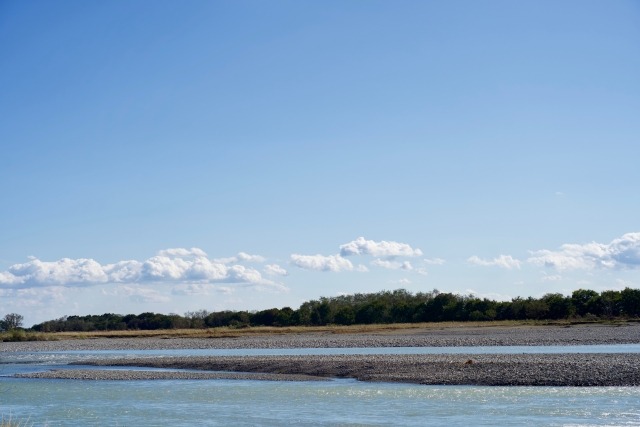
Since Kumagaya Sakura Tsutsumi is part of the riverbank, you can extend your walk along the river if you feel like it. Rather than the river’s flow itself, what you enjoy are the embankment lines, the broad sky, and layered distant scenery—giving a different rhythm from urban walking. Those who dislike crowds can find quieter moments just by stepping slightly outside dense cherry blossom areas.
Add a Small Trip via Chichibu Railway
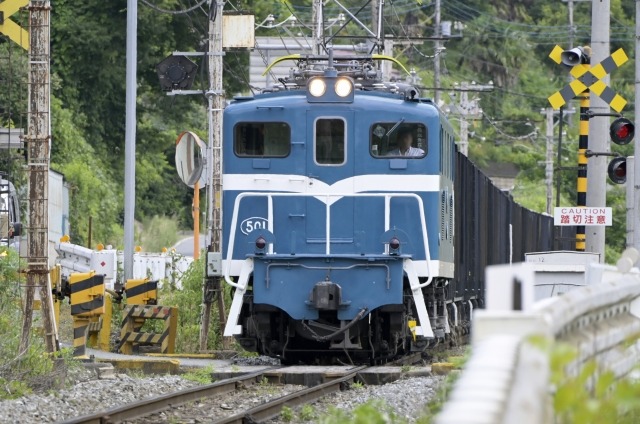
Kumagaya Station is also one terminus of the Chichibu Railway. Riding the local railway to another town after cherry blossom viewing gives you a stronger "day trip" feel. Spring from the train window shows the palettes of fields changing color, conveying the seasonal shift even on short routes.
Detour to Gyoda Area (Historical Walk)
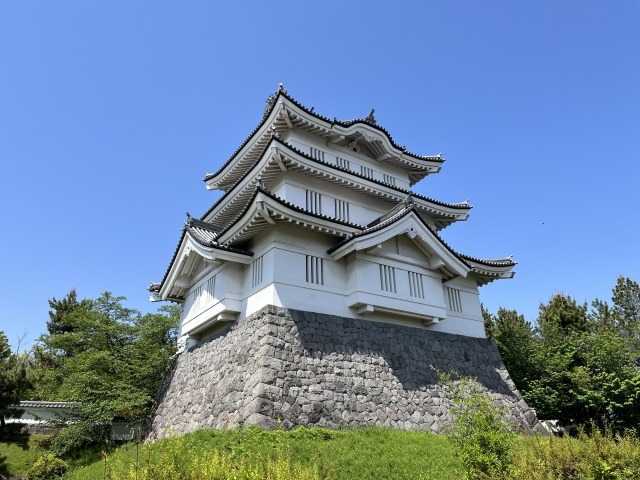
By extending a bit from Kumagaya, you can go to Gyoda's historical walking area, where castle ruins and historic sites are scattered. After the lively cherry blossoms, walking calm historical sites offers a pleasant contrast in your travel’s temperature and mood. On days you want to avoid crowds, keep your time at the Sakura Tsutsumi shorter and move to quieter surrounds.
Combine with Fukaya Area (Modern Town Atmosphere)
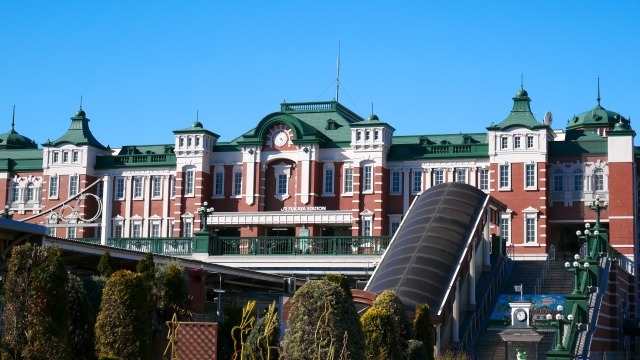
The Kumagaya area also reflects histories of modern transportation and industry. If you have time, moving to another town to view buildings and streetscapes is recommended. Cherry blossoms offer a seasonal experience, while town walks offer a cultural and lifestyle experience. Combining both shifts your photo folder from "only flowers" to a "travel record."
In Conclusion
The charm of Kumagaya Sakura Tsutsumi lies not only in the quantity or fame of cherry blossoms but also in the openness by the river, proximity to the station, changing views from day to night, and the freedom to incorporate the spring bustle at your own pace. Whether you target the perfect full-bloom day for "spectacular spring scenery" or prefer quiet hours to avoid crowds, this spot works well either way. As a cherry blossom spot where viewing becomes not just "one plan" but "the memory of the entire day," Kumagaya Sakura Tsutsumi is a very reliable choice.
Search Restaurants by Destination

Search Restaurants by Popular Cuisines

Search Restaurants by Characteristics