What is soba?
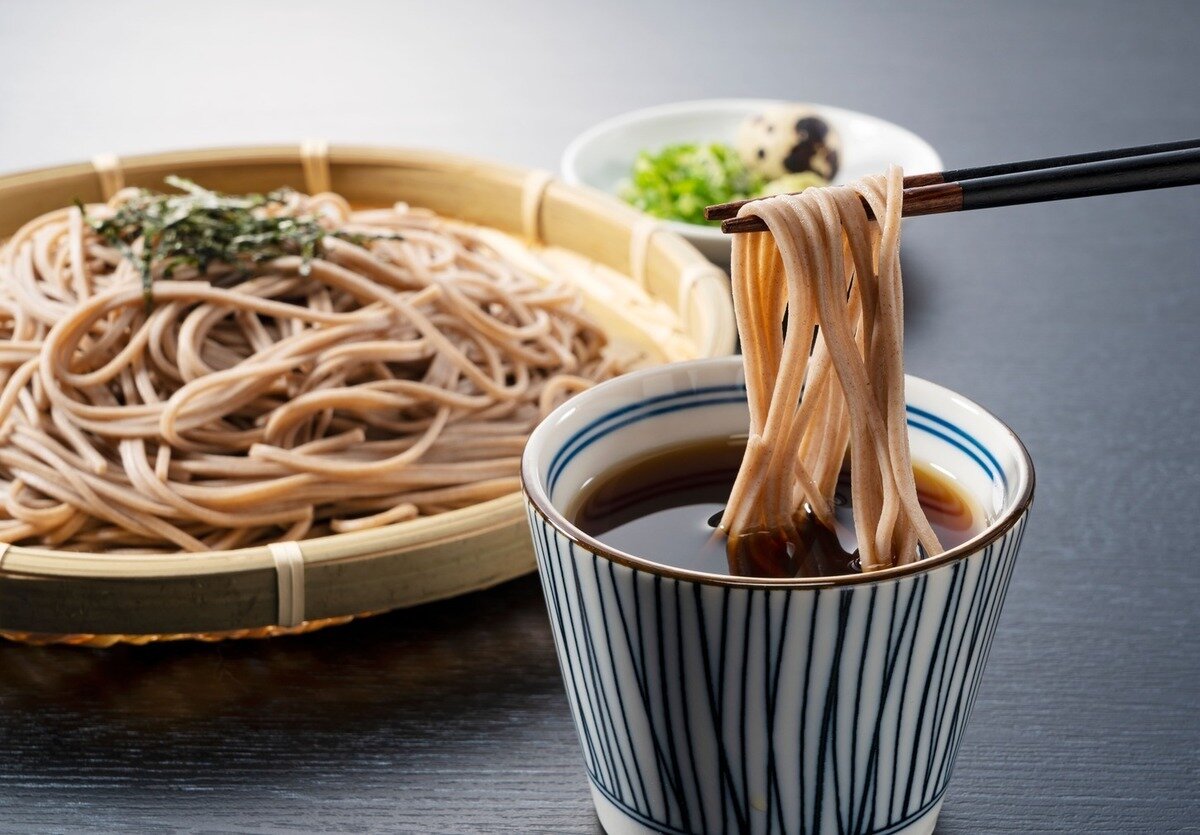
Soba is a noodle dish made from buckwheat flour, derived from the grain of buckwheat.
The dish is typically served with noodles that are dipped in a cold or warm sauce.
The soba sauce used as a seasoning for the noodles varies in color, thickness, taste, and other characteristics depending on the region, and the preferred style similarly varies from region to region.
Buckwheat is highly nutritious and low in fat and cholesterol, making it a healthier choice.
In Japan, making a slurping sound when eating soba is not considered bad manners.
Soba has a long history and is one of the most popular traditional Japanese dishes, along with sushi and tempura.
There are several theories about the origin of soba, but the popular ones argue that soba was introduced to Japan from the Korean Peninsula via Tsushima, from Siberia to northern Japan, and from China to Kyushu.
The most widely accepted theory is the one indicating that it was introduced from China to Kyushu.
It was not until many centuries later that buckwheat was consumed in the form of noodles.
Today, soba is widely recognized as one of Japan's most popular noodle dishes.
Soba Allergy and Gluten Information
Is soba gluten-free?
Buckwheat flour itself does not contain gluten, so soba made from 100% buckwheat flour—known as juwari soba in Japanese—is generally gluten-free. However, many types of soba commonly served in Japan include wheat flour.
For example, ni-hachi soba, which is made with 80% buckwheat flour and 20% wheat flour, does contain gluten. This mixture helps the noodles bind together and improves their texture, making it a common method in soba preparation.
Therefore, if you are avoiding gluten or have a wheat allergy, it’s important to choose your soba carefully.
How can you tell if wheat is used?
The clearest indicator is whether the soba is labeled as juwari soba. This type uses only buckwheat flour with no wheat added. If you see “juwari” mentioned on a restaurant menu, it is likely gluten-free.
On the other hand, ni-hachi soba or sarashina soba often contain wheat flour. Some restaurants may not clearly indicate the ingredients, so if you have allergies, it’s best to ask the staff directly.
A useful question to ask is: “Does this soba contain wheat?” Most establishments will do their best to respond kindly and clearly. While awareness of food allergies is gradually improving in Japan, some restaurants—especially in tourist areas—may not be fully prepared to communicate in English, so asking in advance can help avoid trouble.
Differences Between Soba, Udon, and Ramen
In Japanese cuisine, soba, udon, and ramen are three of the most popular types of noodles. They differ in appearance, taste, and texture, and many travelers enjoy trying each type during their stay.
Soba is made from buckwheat flour and is known for its nutty aroma and light flavor. It can be enjoyed chilled with dipping sauce or in a warm dashi broth. The texture is slightly coarse, and the flavor is deep and distinct.
Udon is made from wheat flour and has a thick, soft texture. It's usually served in a warm broth seasoned with dashi, giving it a gentle, comforting taste. Because it is easy to digest, it’s popular among children and the elderly.
Ramen is also made from wheat flour but uses kansui, an alkaline mineral water that gives the noodles a firm, chewy texture and a unique flavor. The soup bases vary widely—from pork bone (tonkotsu) to miso, soy sauce, and salt—offering rich, bold flavors. Ramen tends to appeal to those who enjoy hearty, satisfying meals.
Soba is a great choice for those looking to enjoy a traditional, lighter taste of Japan. Its subtle broth aroma and the unique slurping culture that accompanies soba eating offer an experience distinct to Japanese food culture. Compared to udon and ramen, soba is generally lower in calories and is often preferred by health-conscious eaters.
Varieties of soba noodles
There are many varieties of soba noodles, and some of them will be explained below.
Zaru-soba (cold soba)
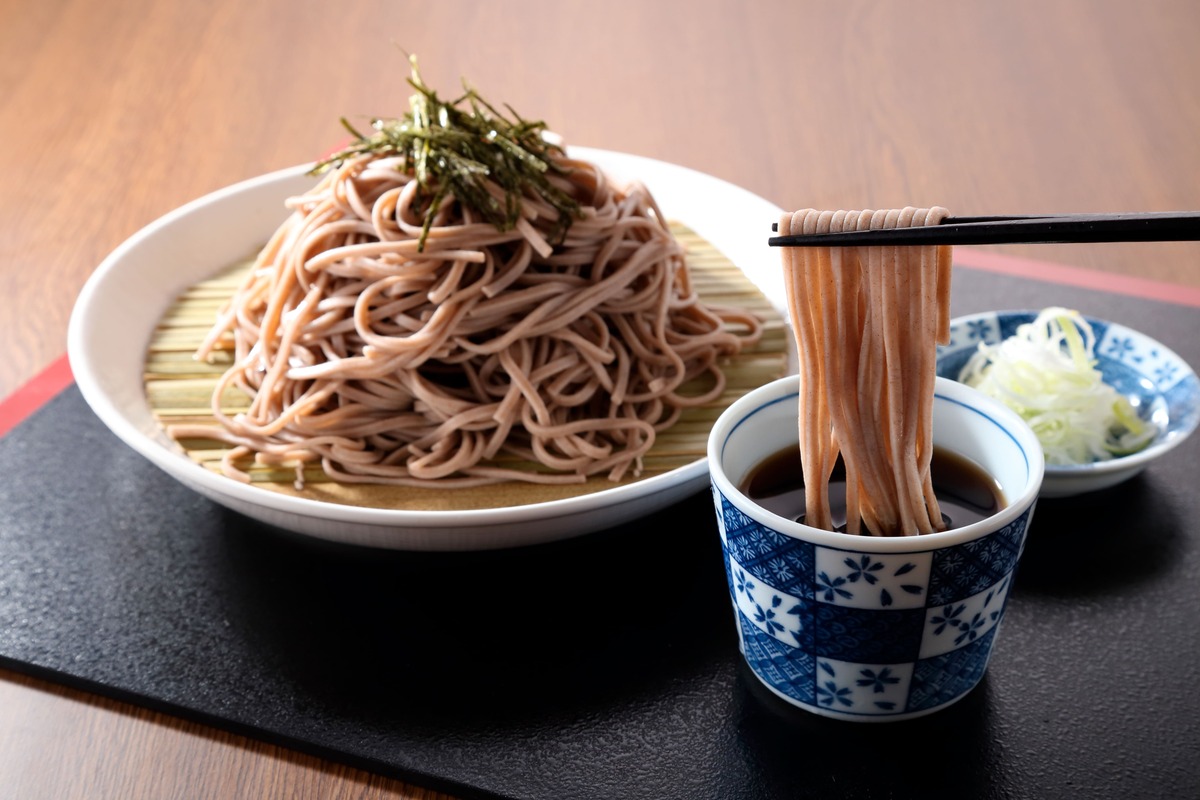
Soba noodles are boiled and then served cold on a basket or tray.
The dipping sauce is made of dashi broth, soy sauce, mirin (sweet rice wine), and other ingredients and is served separately.
You can add garnish to the sauce according to preference.
Soba noodles served on a wooden seiro tray are called seiro-soba.
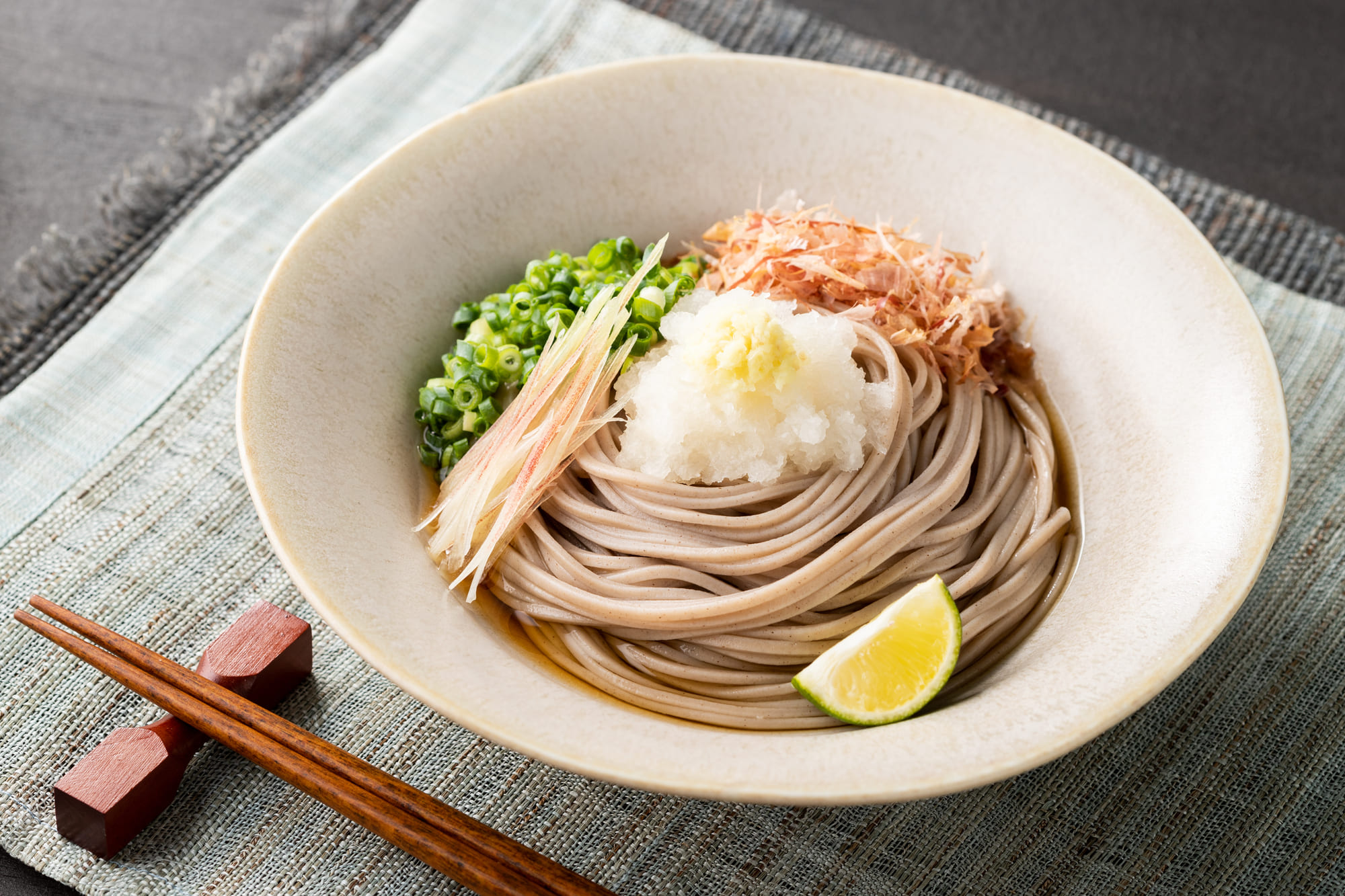
Hiyashi-soba (cold soba with toppings)
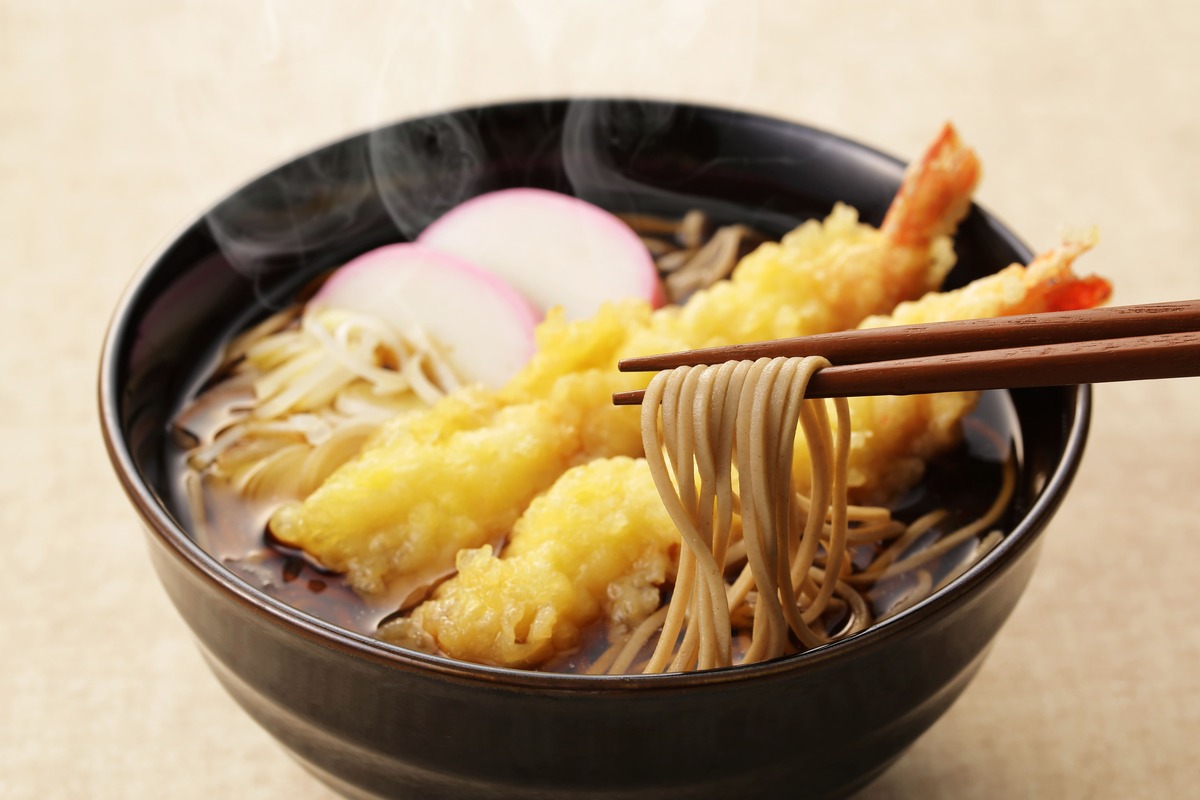
Like zaru-soba, this type of soba is served cold with various toppings, such as condiments, tempura, vegetables, and other ingredients.
The toppings vary widely from restaurant to restaurant.
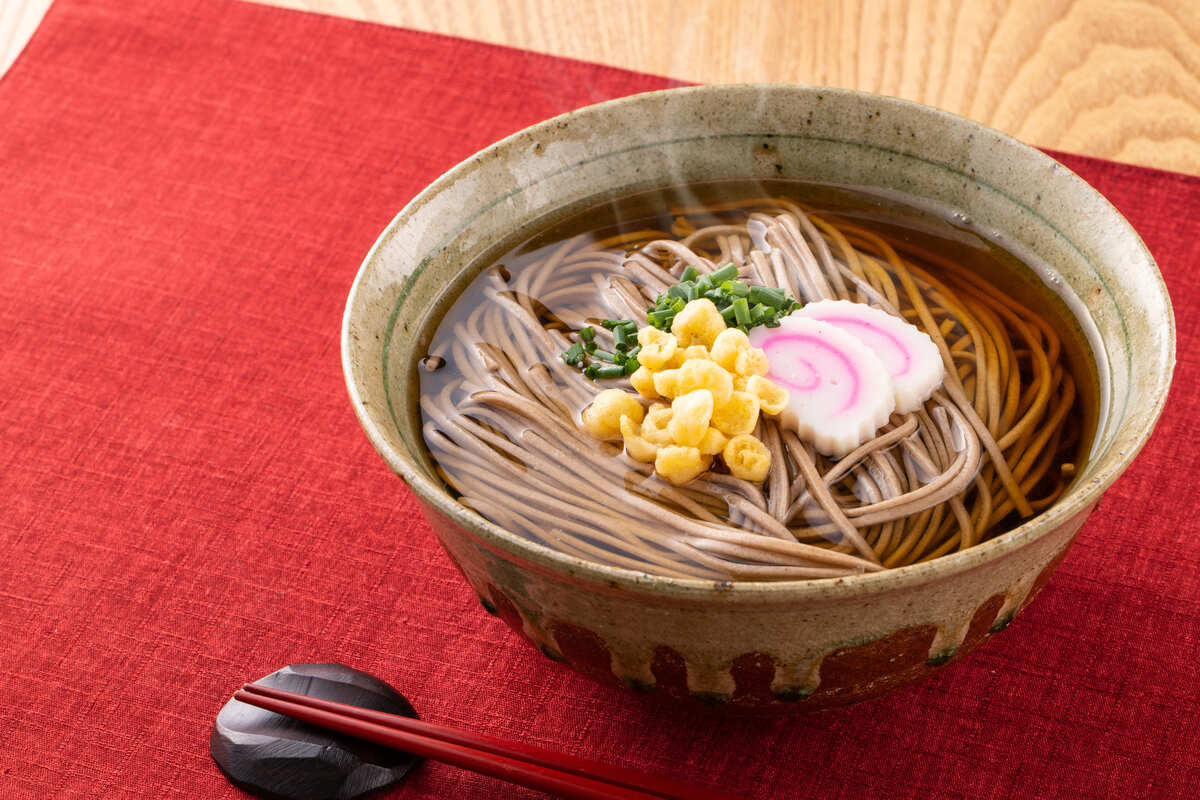
Kake-soba (soba noodle soup)
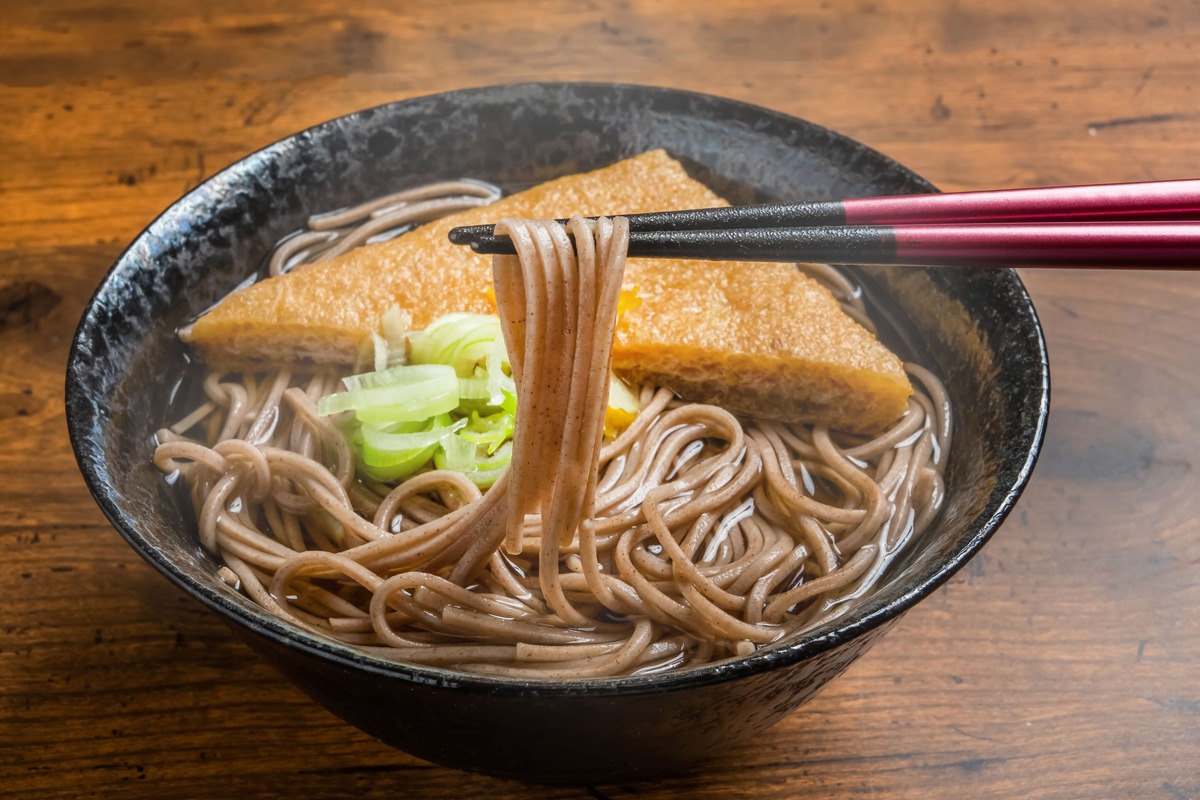
These soba noodles are served in a hot soup.
Although simple, you can enjoy the flavor of the soup and the texture of the soba noodles.
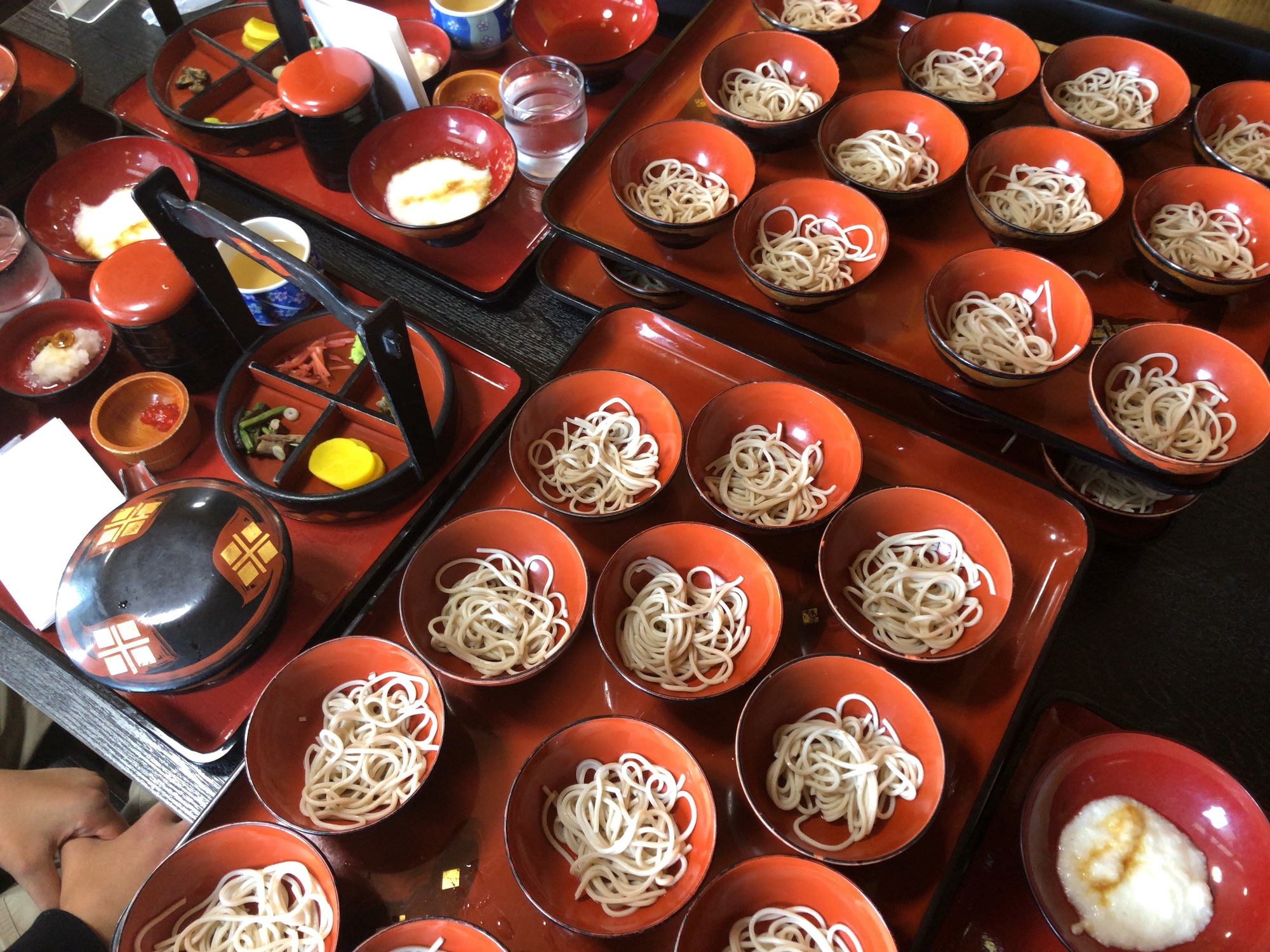
Wanko-soba (all-you-can-eat soba)
This is a traditional way of eating soba unique to Iwate Prefecture, where a small amount of soba is served continuously in a wanko (small bowl) and eaten repeatedly.
Competing to see who can eat the most is a fun and competitive way of eating soba.
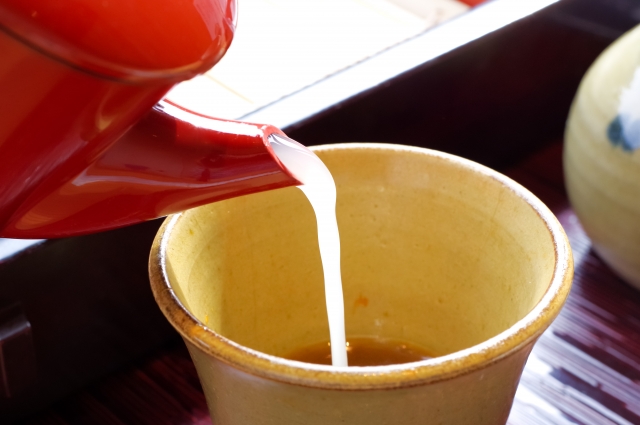
Sobayu (hot water used for boiling soba)
The hot water left after cooking soba noodles is called sobayu, and many people drink it after finishing the noodles.
Drinking sobayu enhances the flavor and nutritional value, particularly after eating cold soba.
It can be consumed straight or mixed with a dipping sauce.
How to make soba noodles
The following shows how teuchi-soba, a type of soba made by manually making dough from buckwheat flour and cutting the noodles, is prepared.
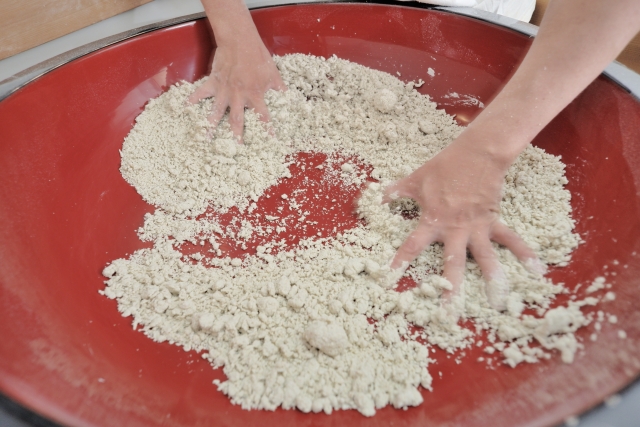
First, the dough is made.
Buckwheat flour is put in a bowl and mixed by hand, adding water little by little.
The amount of water depends on the type of buckwheat flour, humidity, and temperature.
Finding the right amount of water requires expert skill.
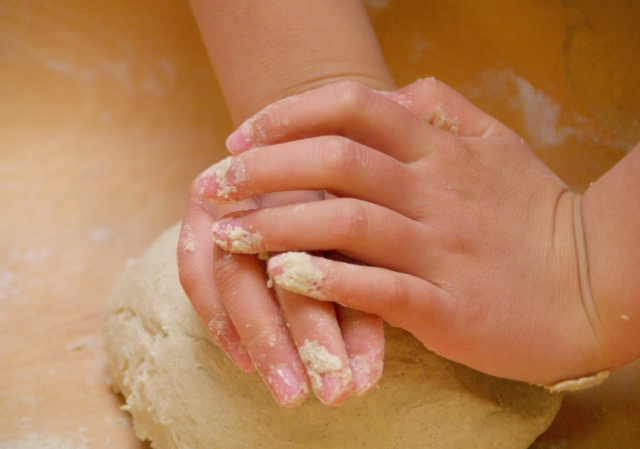
Once the dough comes together and is smooth, it is carefully kneaded on a table.
It is kneaded until the noodles have an even elasticity.
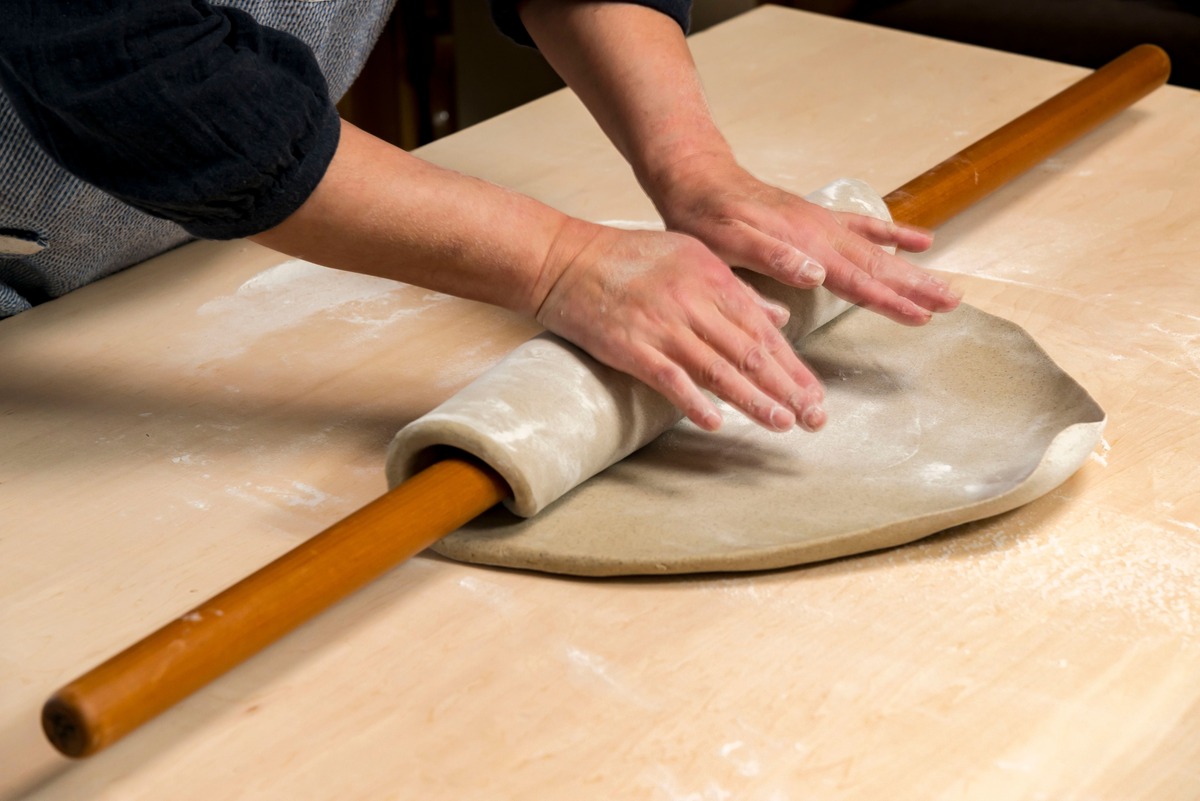
Next, the dough is stretched into a stick shape using a rolling pin to make it thin and even.
When stretching the dough, it is important to achieve an even thickness.
This is another point where expert skill is required.
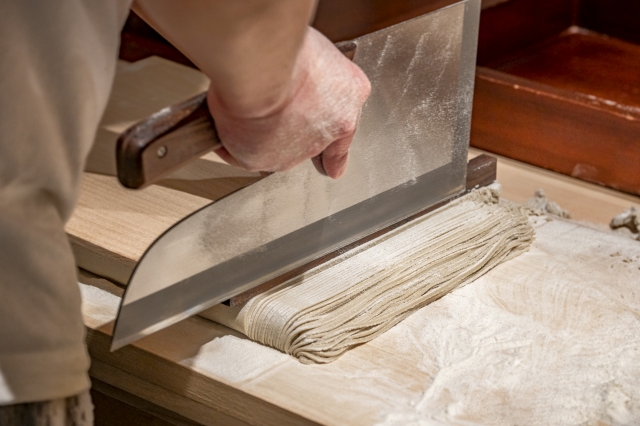
After the step, the dough is cut.
It is folded and cut into even widths with a knife.
There are various ways to cut soba noodles, from thin to thick, with cutting being where the ability of the chef is tried.
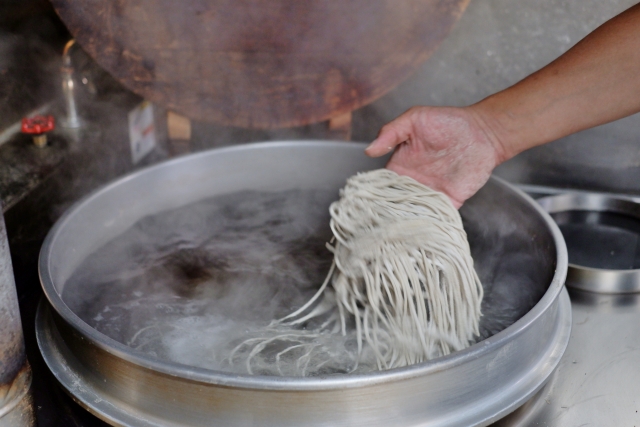
The cut noodles are then boiled for a short time.
The thickness of soba noodles determines the boiling time, but they are generally boiled for a short period of time.
The cooked noodles are immediately cooled in cold water.
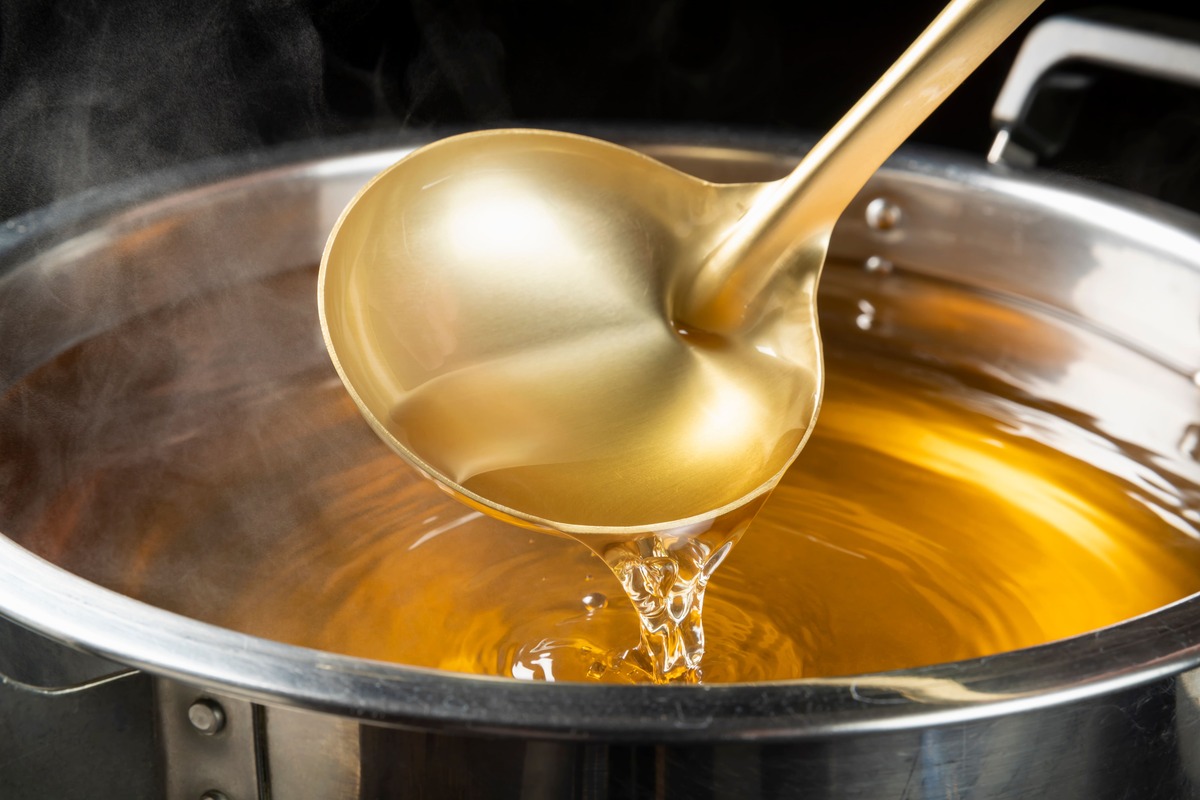
Next, the dipping sauce for zaru-soba (cold soba) and dashi broth for kake-soba (soba noodle soup) are prepared.
Both are made by placing bonito flakes and kombu kelp in water and heating, then turning off the heat just before it comes to a boil.
Soy sauce, mirin (sweet rice wine), and sugar (if needed) are added to the broth to adjust the taste.
The sauce for zaru-soba is thicker, while the broth for kake-soba is often made with a smaller amount of soy sauce than the dipping sauce.
Next, toppings are prepared.
Toppings often include leek, wasabi, and grated daikon radish for zaru-soba, and leek, shichimi spice, tenkasu (deep-fried batter) for kake-soba.
Finally, the noodles are served with a dipping sauce or in dashi broth, along side toppings.
Zaru-soba is served by placing the noodles on a basket and providing them with a dipping sauce and toppings, while kake-soba is served by placing the noodles in a bowl, pouring dashi broth over them, and garnishing them with toppings.
How to eat soba noodles
Buy meal ticket
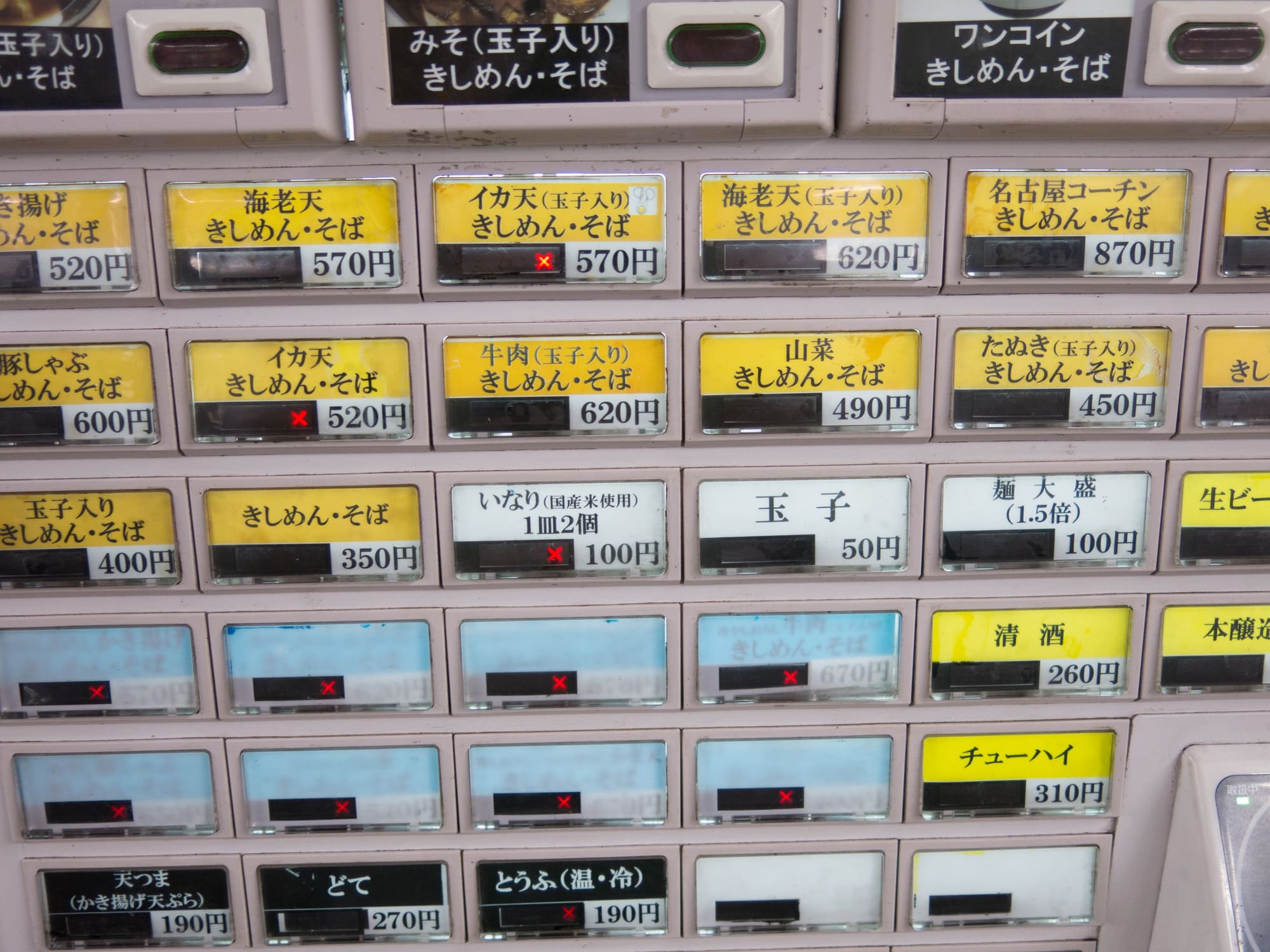
Depending on the restaurant, you can find a ticket vending machine near the entrance, just like a ramen shop.
Select a menu item from the ticket machine and purchase a meal ticket.
You can also buy toppings and sides from the machine.
Hand meal ticket to staff
Once you are seated, give your meal ticket to the staff.
Wait
Wait until the soba you ordered is served.
If the restaurant has a self-service water station, you can grab a drink at this time.
Eat
The way you eat your noodles will depend on the type of soba you order.
However, for both types, you can add toppings such as wasabi, ginger, and leek, to the dipping sauce or dashi broth to enjoy with the noodles.
If you ordered zaru-soba, you can eat the noodles by dipping them in a separate sauce.
For kake-soba, you can slurp the noodles with chopsticks and enjoy.
People’s reaction when eating
Search Restaurants by Destination

Search Restaurants by Popular Cuisines