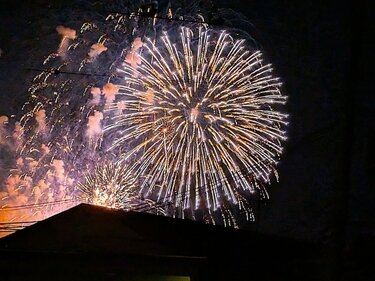
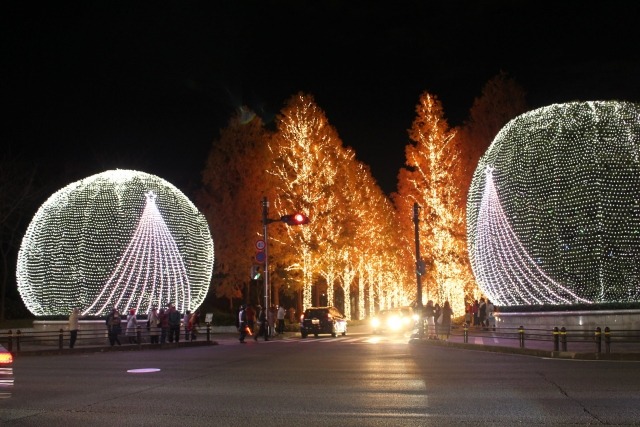
Kyoto is a city known for its history and culture as the thousand-year capital. While the ancient city during the day is certainly attractive, its beauty deepens even more at night. The gently glowing lights on temples, shrines, nature, and streets create an extraordinary atmosphere, warmly surrounding the hearts of travelers—this is the world of Kyoto’s illuminations and light-ups.
Especially in winter, Kyoto offers a fantastic atmosphere where silence and light harmonize in the crisp, clear air, making you feel as if you’ve stepped into a storybook. This is a perfect way to discover new attractions of Kyoto at night when many tourist spots are closed.
In this article, we will carefully introduce recommended illumination and light-up spots in Kyoto for those visiting in the winter of 2025 to 2026, along with their charms and tips for enjoying them. By reading this, you’re sure to find hints for fully enjoying Kyoto’s nights.
1. What Are Kyoto’s Illuminations and Light-ups?
Kyoto’s illuminations and light-ups are distinct from the gaudy or artificial displays seen in other cities. Here, the focus is on "Wa" (Japanese style) productions that cherish seasonal feelings and emotions by making the most of historic temples, shrines, and natural landscapes.
Unlike the so-called "glittery light-ups of commercial facilities," these are modest yet overwhelmingly beautiful, providing deep impressions to visitors. The amount and tone of light colors are designed to harmonize with buildings and nature, allowing visitors to experience the "beauty within silence."
Additionally, themes change with the seasons, such as cherry blossoms in spring, fresh green leaves in summer, autumn foliage, and winter scenes with snow or nighttime skies, making Kyoto’s nighttime enjoyments popular among repeat visitors.
2. Features of Kyoto’s Illuminations and Light-ups
What makes Kyoto’s nighttime light-ups special is not just "showing" light, but giving the entire space a story.
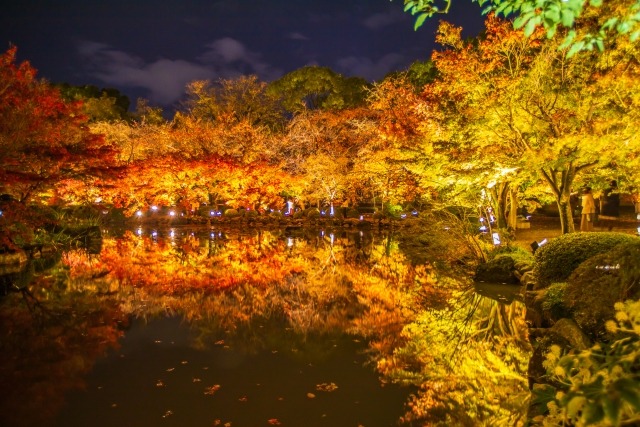
First and foremost is the "fusion of culture and light." Temples, shrines, and traditional architectures with over a thousand years of history are illuminated, allowing you to experience a sacred atmosphere different from the usual. For example, wooden pillars, roof tiles, and dry landscape gardens under soft lighting reveal a profound charm not felt during the day.
Next is the "performance in harmony with nature." Kyoto is a city surrounded by nature, and its light displays collaborate with autumn leaves, bamboo groves, and watersides. In autumn when the leaves color and winter with snow, the beauty of light and nature resonates, spreading a truly fantastical world.
Furthermore, "emotion within silence." Most of Kyoto’s light-up events refrain from loud music or flashy effects, allowing quiet admiration. Visitors can quietly face the light and have a heart-calming experience.
3. Kyoto’s Illumination and Light-up Spots
・Kyoto Station Building
Access: Directly connected to JR Kyoto Station
Event Period: Monday, December 1, 2025 – Thursday, December 25, 2025
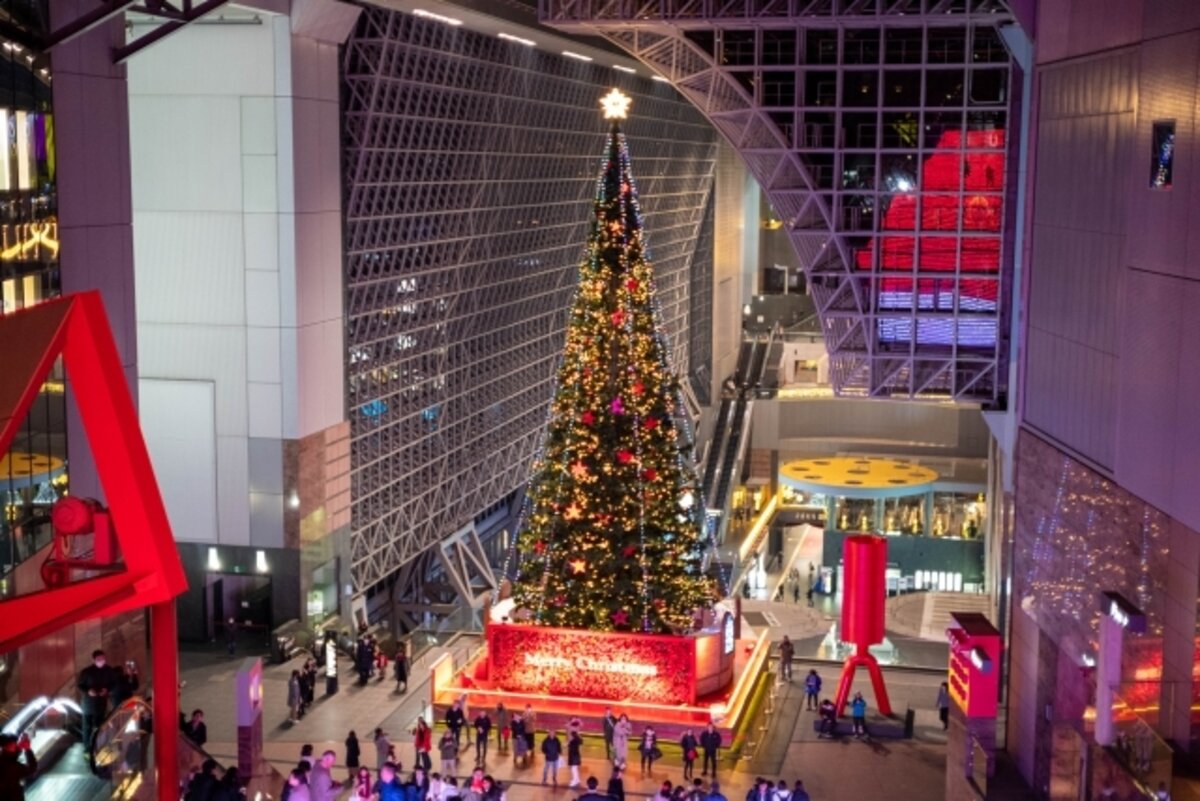
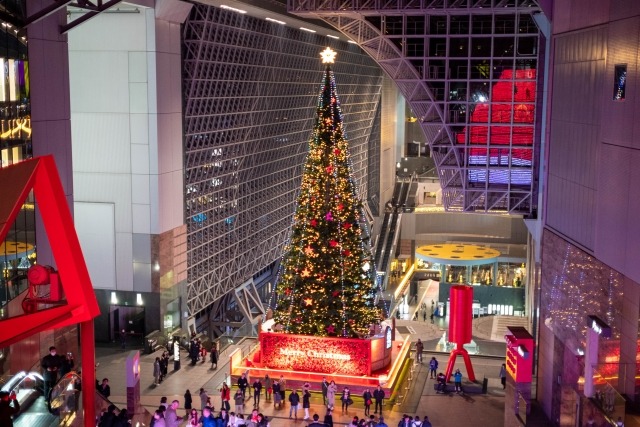
Features: The grand staircase and sky corridor of Kyoto Station Building are adorned with light displays coordinated with music. The 22-meter giant Christmas tree is a highlight, and its casual appeal lets visitors enjoy it between shopping and dining. Since it can also be enjoyed indoors, it’s recommended even on bad weather days to avoid the cold outside.
・Kiyomizu-dera Temple
Access: About 15 minutes by bus from JR Kyoto Station, then 10 minutes on foot
Event Period: Saturday, November 22, 2025 – Sunday, December 7, 2025
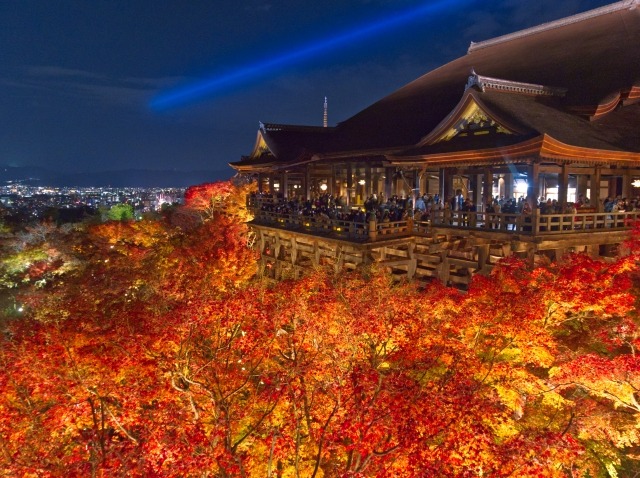
Features: Registered as a World Heritage site, Kiyomizu-dera features a striking contrast between the blue-white illuminated main hall, stage, and the night view of Kyoto City. During the light-up period, special night-time visits are held, allowing visitors to walk through the grounds and experience the historic architecture wrapped in light up close.
・To-ji Temple
Access: About 15 minutes on foot from JR Kyoto Station
Event Period: Saturday, November 1, 2025 – Sunday, December 14, 2025
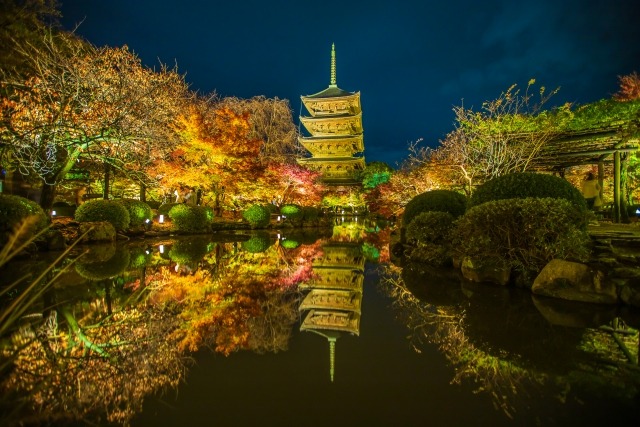
Features: Famous for its five-story pagoda, To-ji is popular for its nighttime light-up combined with autumn leaves. The illuminated autumn foliage alongside the reflection of the pagoda silhouette in the pond offers a beautiful photographic spot.
・Eikan-do (Zenrin-ji Temple)
Access: 15 minutes on foot from Keage Subway Station
Event Period: Saturday, November 15, 2025 – Wednesday, December 10, 2025
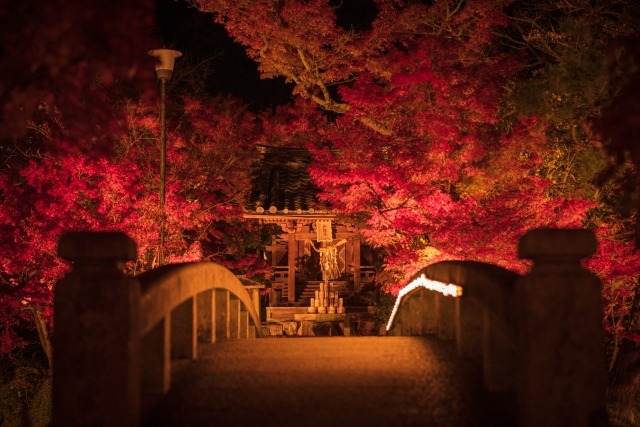
Features: Eikan-do, famous nationwide as a spot for autumn leaves, holds a nighttime light-up during peak foliage. Around 3,000 maple trees colored red and orange glow under the light. The combination with ponds and stone pavements creates a fantastic world.
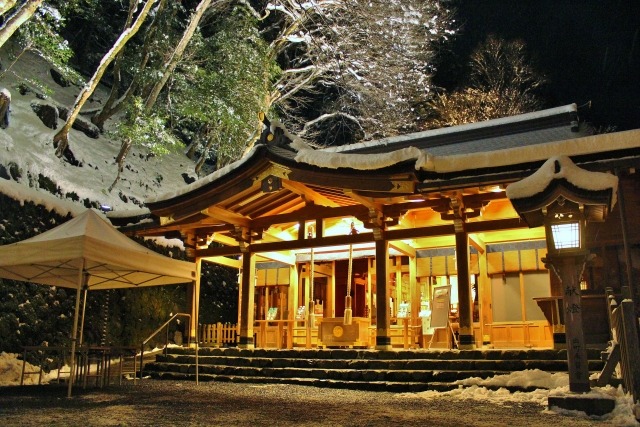
・Kifune Shrine
Access: About 30 minutes on foot from Eizan Railway Kifune-guchi Station (bus available)
Event Period: Undecided. Only when it snows.
Features: A special light-up is lit only on snowy nights. The stone lanterns lining the steps, snowy scenery, and surrounding mountains weave a magical world, making it a winter’s must-see. Because it depends on weather conditions, the joy when you are lucky enough to see it is immense.
4. Tips for Enjoying Illuminations
To enjoy Kyoto’s illuminations and light-ups more deeply, there are several points to keep in mind.
First, advance research and schedule management are important. Popular spots have limited event periods and can be very crowded during certain times. It’s better to aim for times just after opening or just before closing when it’s relatively less crowded.
Next, dress appropriately. Kyoto’s winter nights can be severely cold, sometimes below freezing. Make sure to keep your body warm with thick coats, gloves, scarves, and heattech innerwear. Since you’ll often walk on stone pavements and stairs, choose comfortable and non-slip shoes.
Also, avoid crowds as much as possible. Places like Kiyomizu-dera and Eikan-do are especially popular among foreign tourists and can have long lines even at night. If tickets can be purchased in advance, booking is recommended for smooth entry. Alternatively, visiting relatively lesser-known spots can also help avoid crowds.
5. Nearby Gourmet
Enjoying Kyoto-style gourmet food before or after viewing illuminations is one of the pleasures of travel. Foods that warm your chilled body or sweets that evoke Japanese elegance let you fully savor Kyoto’s tastes.
For example, yudofu (boiled tofu) and obanzai (Kyoto-style home cooking) feature gentle but profound flavors. Especially around Nanzen-ji and Kiyomizu-dera, they are served in charming machiya townhouses, turning meals themselves into a sightseeing experience.
Also, warm matcha tea or zenzai (sweet red bean soup with mochi) penetrates the chill in your body. Many sweet shops are conveniently located to drop by after light-up, making them perfect for ending your day.
Nighttime cafes and izakayas also offer creative dishes using local ingredients and local sake. To enrich your nights in Kyoto, be sure to check out the dining options.



In Conclusion
Kyoto’s illuminations and light-ups are not just about admiring light but are deeply connected with multifaceted charms like history, culture, and nature, creating a profoundly memorable experience. This light production, where you can feel the unique "beauty within silence," offers a precious opportunity to savor the essence of Kyoto at night.
Kyoto at night shows a different face from daytime sightseeing spots. Surrounded by magical light, you can quietly and slowly spend your time. Such travel memories will surely stay with you for a long time.
Be sure to visit Kyoto’s illuminations and light-ups this winter, see with your own eyes, feel with your heart, and experience their beauty.
Search Restaurants by Destination

Search Restaurants by Popular Cuisines