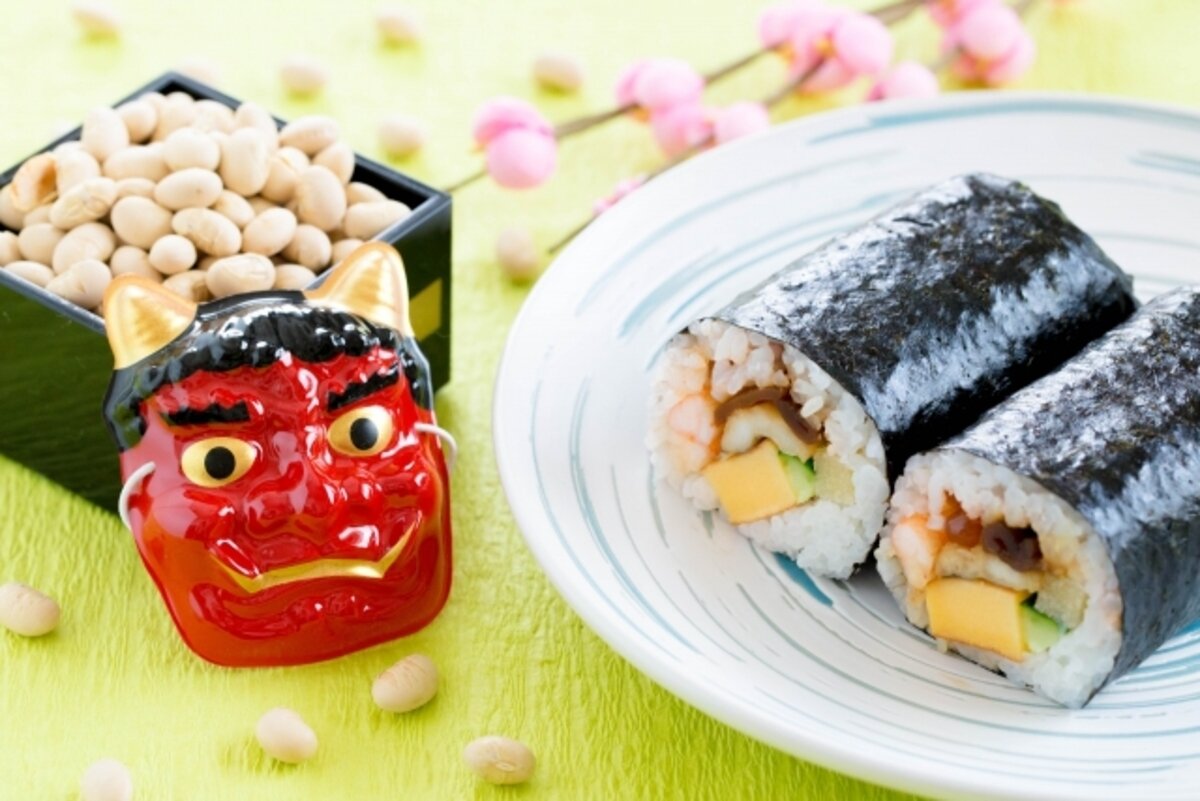
Depending on the time you visit Japan, you can experience various traditional cultures. If you are in Japan in early February, you might come across a somewhat unique and somehow enjoyable event called "Setsubun." Oni masks line the supermarkets, people throw beans, and silently eat thick rolls called Eho-maki—such a mysterious sight will surely spark your curiosity with a "What is this?"
In fact, Setsubun is an important event celebrating the change of seasons, widely known among Japanese people as a day to "ward off evil and invite good fortune." This article clearly introduces the meaning and ways to enjoy Setsubun, as well as places where you can participate. We hope it will be an opportunity for you to experience the depth of Japanese culture and want to try it yourself.
1. What is Setsubun?
Setsubun is a traditional Japanese annual event meaning "the day that divides the seasons." Originally, the days before Risshun, Rikka, Risshuu, and Rittou (the beginning of spring, summer, autumn, and winter) were called "Setsubun," but nowadays, it generally refers to the day before Risshun (usually February 3rd).
Risshun, marking the beginning of spring, originates from an ancient Chinese calendar and was regarded as the start of the new year. Therefore, Setsubun carries a meaning similar to "New Year's Eve in the old lunar calendar," and rituals developed to expel evil spirits and welcome good fortune.
On Setsubun day, bean throwing is held in households and shrines throughout Japan. This custom is to drive away bad things (oni = evil spirits), wishing for family safety, health, and happiness.
2. What is Bean Throwing?
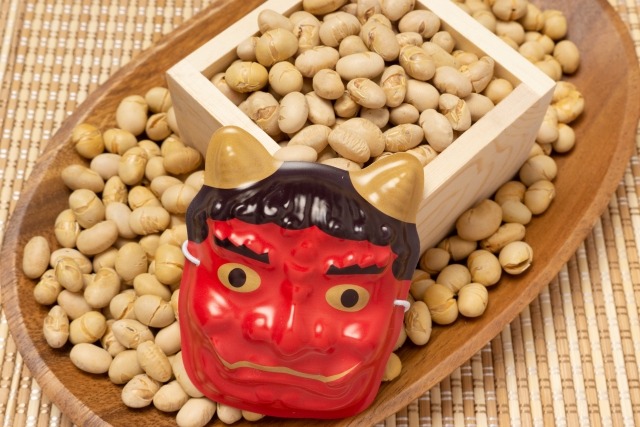
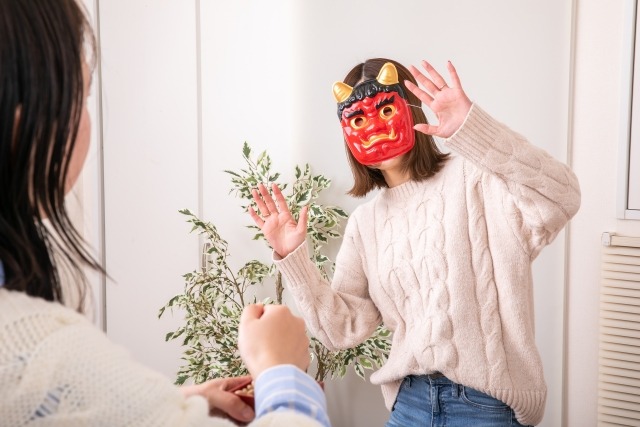
The most representative event of Setsubun is "mame-maki" (bean throwing). This custom, where roasted soybeans are tossed inside houses, at entrances, or at shrines while shouting "Oni wa soto! Fuku wa uchi!" ("Demons out! Fortune in!"), has been practiced since ancient times and is still inherited by many households and communities today.
※Oni: Traditional Japanese figures symbolizing calamity, often depicted with horned faces and tiger-patterned clothing.
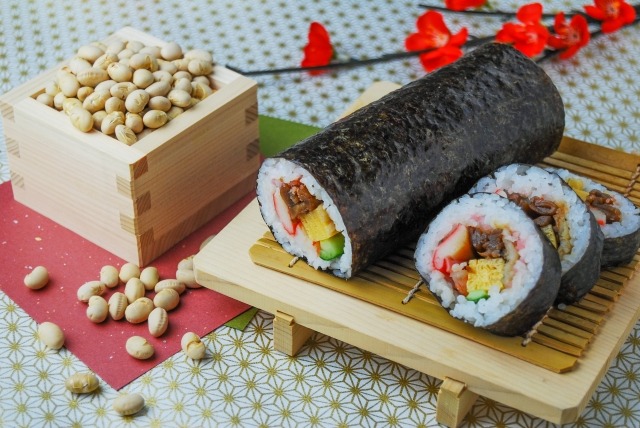
The beans used for bean throwing are roasted soybeans. The reason roasted beans are used is to prevent any beans left behind from sprouting. The word "mame" (bean) is a pun on "mametsu," meaning "to destroy evil," symbolizing the expulsion of evil spirits.
Typically, the head of the household or the "toshi otoko" (man of the year, corresponding to the year's zodiac sign) throws the beans, but recently, children wearing oni masks join, making it a family-friendly event. After throwing beans, there is a custom to eat the same number of beans as your age, believed to ensure health throughout the year.
In some regions, peanuts are used instead of soybeans. Especially in places like Hokkaido and the Tohoku region, peanuts are common due to their ease of pickup and hygiene.
3. What is Eho-maki?
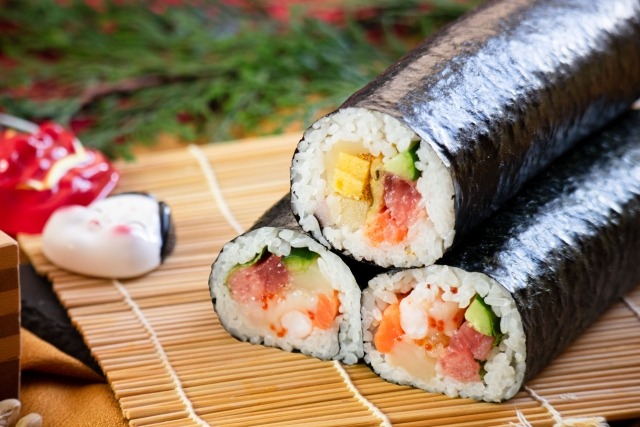
A recent indispensable item on Setsubun is "Eho-maki." Eho-maki is the custom of silently eating a whole thick sushi roll while facing that year's "lucky direction" called "Eho" on Setsubun day.
※Thick sushi roll: A thick and satisfying sushi roll made by rolling multiple ingredients with vinegared rice and seaweed.
This custom originally started in the Kansai region as a ritual wishing for prosperous business and household safety. Thanks to promotional campaigns by supermarkets and convenience stores, it spread nationwide since the 1990s and has now become an established annual event for Setsubun.
Eho-maki is considered lucky when it contains seven ingredients inspired by the Seven Lucky Gods. Typical fillings include kanpyou (dried gourd strips), shiitake mushrooms, tamagoyaki (rolled omelet), eel, cucumber, sakura denbu (pink fish flakes), and koya tofu; however, in recent years, modern versions with roast beef or fried shrimp have appeared.
※Seven Lucky Gods: Seven deities believed to bring fortune, prosperity, health, and academic success in various ways.
The rule when eating Eho-maki is to eat it whole without cutting, symbolizing the wish to "not cut ties." Also, you should eat it silently while thinking of your wishes, which is believed to help those wishes come true.
4. Origin of Setsubun
The origin of Setsubun dates back to the Heian period. It was originally a ritual called "Tsuina," imported from China as a ceremony to ward off evil, performed at the imperial court.
In this Tsuina ritual, people wearing oni masks performed ceremonies to expel evil spirits and epidemics, and gradually, it spread among the common people, evolving into modern-day bean throwing.
Beans are believed to have the power to expel evil due to a pun on "mametsu" and also have a sacred meaning as one of the five grains, which contributed to the tradition of bean throwing.
Moreover, the presence of oni is a cultural feature unique to Setsubun. Oni represent invisible bad energies, illnesses, and disasters, and "chasing away oni = removing misfortune" is the main purpose of Setsubun.
5. Setsubun Trivia
Here are some little trivia about Setsubun. Knowing them will deepen your enjoyment.
- The phrase shouted during bean throwing, "Oni wa soto, fuku wa uchi," varies by region. For example, in some areas where oni is regarded as a divine messenger, only "Fuku wa uchi" is chanted, or "Oni wa soto" is omitted.
- Oni masks are mainly red and blue oni, but there are colorful variations like green and black oni.
- At shrines and temples, events where celebrities and local dignitaries throw beans are held, attracting large crowds. Some places also distribute "fukumame" (fortune beans) in bags to worshippers.
- In Setsubun season, not only beans and Eho-maki appear on supermarket shelves but also many oni goods and decorations.
- After bean throwing, cleaning is necessary. Leftover beans sometimes become bird feed.
6. How to Enjoy Setsubun
Setsubun is not just an event to watch but its charm is better felt by experiencing it firsthand. The low barrier to participation and ease for anyone to enjoy are also great points of Setsubun.
First, try mame-maki; you can easily do it at home. During the Setsubun season, you can get beans and oni masks at supermarkets or 100 yen shops, so try buying them during your trip and try it at home.
Next, Eho-maki. Many varieties of Eho-maki are sold at convenience stores and department store basements, so choose one that suits your taste. There are vegetarian options, seafood-rich rolls, and quirky rolls, offering plenty of variety.
Also, pay attention to Setsubun events held across Japan. At shrines and temples, besides bean throwing, you can enjoy stage performances, mochi throwing, and festival-like stalls. Tourists are often welcome at these events, making it especially enjoyable for those with children.
If you bring a camera, you can capture many Instagram-worthy photos of people dressed as oni and lively precinct scenes.
7. Places to Experience Setsubun
You can experience Setsubun throughout Japan, but especially popular shrines and temples include the following.
Naritasan Shinshoji Temple (Chiba Prefecture)
Known for celebrities throwing beans, it is a large-scale event broadcast on TV, attracting many visitors.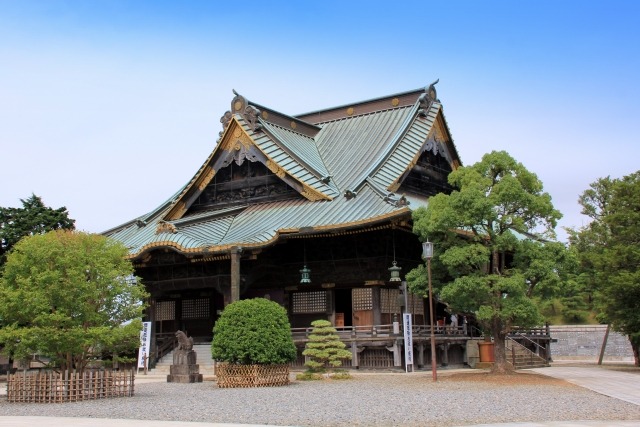
Senso-ji (Tokyo)
Setsubun in Asakusa, a representative Tokyo tourist spot, is popular among foreign tourists for its traditional bean throwing.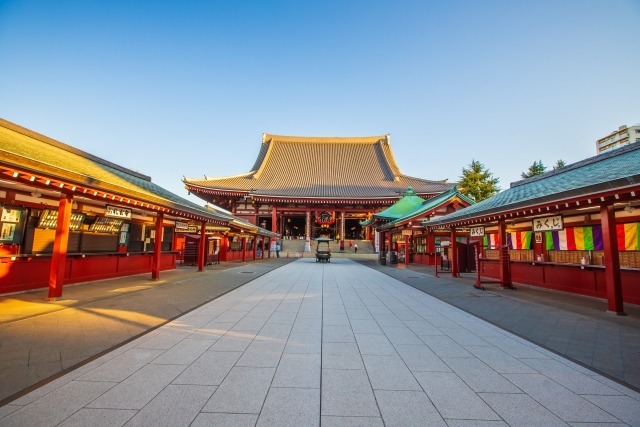
Yoshida Shrine (Kyoto Prefecture)
One of Kyoto’s most famous Setsubun festivals. Many food stalls line the approach, creating a festive atmosphere.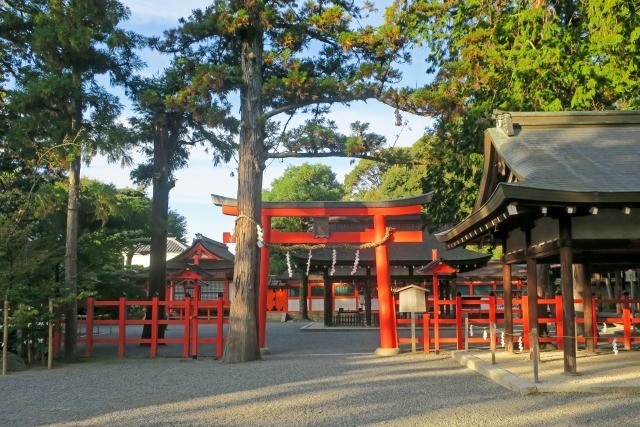
Osaka Tenmangu Shrine (Osaka Prefecture)
At this historic shrine’s Setsubun festival, beans are thrown from the stage, and spectators hold out bags to catch them.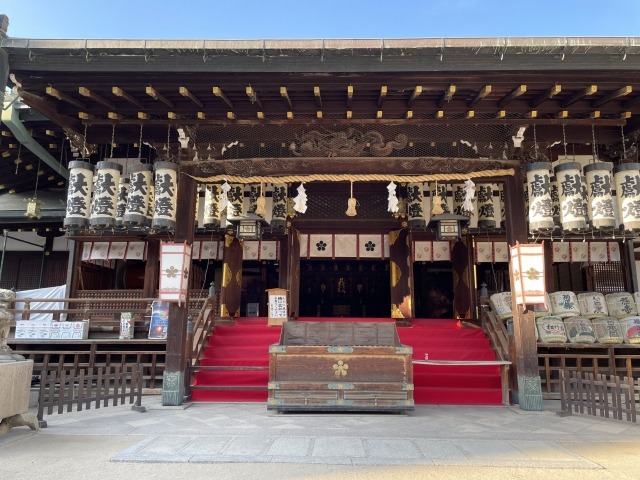
These events attract many people but are very valuable as cultural experiences. It is advisable to check the event times and access beforehand for安心.
In Conclusion
Setsubun is an important event celebrating the transition from winter to spring in Japan, a tradition through which people have long "warded off evil and invited good fortune." The culture lives on through simple yet profound customs like bean throwing and Eho-maki, and it is widely beloved even in modern Japan.
This event is open to tourists and anyone can participate easily without special preparation. If you become interested in the oni masks you see on the street or the colorful Eho-maki at supermarkets, that is a wonderful chance to encounter Japanese culture.
If you visit Japan in February, be sure to feel the atmosphere of Setsubun. Throwing beans, eating Eho-maki, and welcoming the new spring with Japanese tradition will surely enrich your travel memories.
Search Restaurants by Popular Cuisines