Every February, the streets in Japan are suddenly wrapped in a glamorous atmosphere. Cute hearts and chocolates line the shop windows, and special venues at department stores become bustling with many people. Travelers from abroad who experience this scene for the first time might wonder, "What event is this?"
The answer is "Valentine's Day." It is an event loved worldwide, but in Japan, it has evolved into a somewhat unique form.
This article explains in detail the uniquely Japanese Valentine's Day culture. What is different from Valentine’s Day around the world? Why do women give chocolates? What kinds of chocolates are there? Additionally, it introduces tips for enjoying Valentine's experiences even while traveling. If you visit Japan around February, experiencing this special culture can be one of the joys of your trip.

1. What is Japanese Valentine's Day?
In Japan, Valentine's Day is widely known as the day on February 14 when women give chocolates to men. Of course, it is an opportunity to confess love to lovers or partners, but it is also used as a moment to express daily gratitude to colleagues at work, bosses, family, friends, and so on.
From early February, Valentine's chocolates are lined up everywhere from convenience stores to department stores. Limited-time sweets appear, and chocolates from famous domestic and foreign brands are sold, making it look like a chocolate festival.
If you visit Japan during this period, you can encounter glamorous chocolate displays wherever you go and fully enjoy the seasonal atmosphere.

2. Differences between Japanese Valentine's Day and Overseas
In many countries around the world, Valentine's Day is generally when men give gifts to women. It is spent as a day for couples to spend special time together, exchanging bouquets, accessories, dinners, and so on.
However, in Japan, it is completely the opposite. Women take the lead, prepare chocolates, and hand them over with heartfelt feelings. This culture is believed to have begun from advertisements spread by chocolate manufacturers in the 1950s, and it is a rare global example where corporate promotion became established as a social custom.
Another major difference is the wide range of purposes for chocolates. Beyond love confessions, chocolates are also given to express gratitude, friendship, and even for favorite idols or characters known as "oshi." Valentine's Day in Japan is accepted in various forms.
3. Origin of Valentine's Day
There are various theories on the origin of Valentine's Day. The most famous goes back to the Roman Empire in the 3rd century. At that time, Emperor Claudius II thought morale would decline if young soldiers had families, so he banned their marriages. Valentinus, a Christian priest, secretly married the soldiers in defiance of this.
When this act was discovered, Valentinus was executed. The day he was martyred was February 14, and he was later worshipped as the "patron saint of love." This marks the beginning of Valentine's Day.
In the West, this day became known as "a day to express love," and a custom where lovers convey affection to each other took root.
4. Valentine Culture in Japan
Valentine's Day was introduced in Japan in the 1930s. Initially, it did not catch on much, and it became lively mainly from the 1970s onwards.
Chocolate manufacturers actively campaigned to promote it as "a day for women to give chocolates to men," and the culture of women giving chocolates at schools and workplaces became established.
Also, Japanese people tend to feel shy about expressing their feelings face-to-face, and Valentine’s Day became the perfect occasion to "shape feelings that are difficult to express in words."
Recently, occasions where people exchange chocolates regardless of gender have increased, and Valentine's Day continues to evolve as an event that everyone can enjoy.
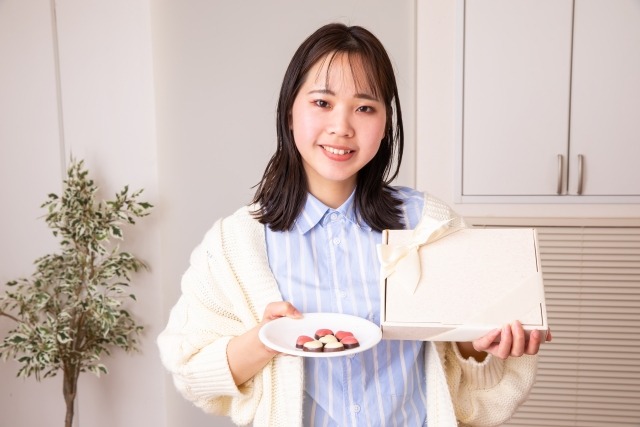
5. Types of Chocolates on Japanese Valentine's Day
On Japanese Valentine’s Day, the name and meaning of chocolates change depending on the recipient and purpose. Below are typical types.
- Honmei Chocolate
Special chocolates given to lovers or someone you like, filled with special feelings.
Often handmade or from high-end brands, it is also used as a means of confession or expression of affection. - Giri Chocolate
Chocolates given to colleagues, bosses, or people to whom you feel gratitude.
Usually reasonably priced and easy-to-distribute individually wrapped types are common. - Tomo Chocolate
Casual chocolates exchanged among friends.
Popular mainly among students, with emphasis on cute appearance and design. - Jibun Chocolate
Chocolates enjoyed as a reward for oneself.
Luxury chocolate brands and limited products are popular, chosen to enjoy a luxurious feeling. - Fami Chocolate
Chocolates given to family.
Children give them to parents, or families share together, serving as a warm communication trigger. - Oshi Chocolate
Chocolates given (or dedicated) with feelings towards a favorite idol, anime character, actor, etc. known as “oshi.”
Used for SNS posts and fan interactions, this is a rapidly growing new culture.
Thus, the meaning and purpose of chocolates on Japanese Valentine's Day have diversified, expanding ways to enjoy beyond just romantic love.
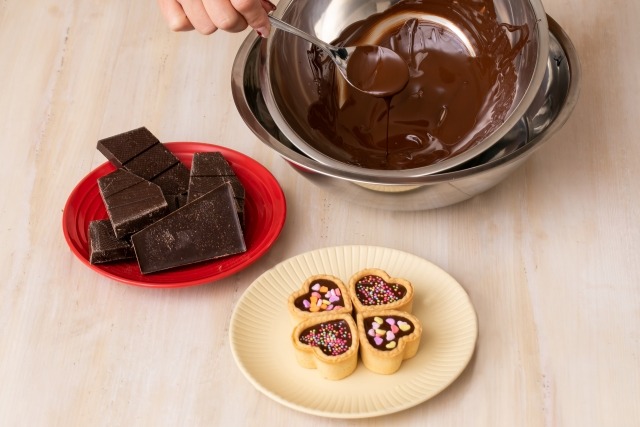
6. What is White Day?
Exactly one month after Valentine's Day, on March 14, there is "White Day." This is the day when men who received chocolates on Valentine's Day return a gift to women.
White Day is also a unique culture to Japan, devised by the confectionery industry in the 1970s. The custom spread for men who received chocolate on Valentine’s to give back marshmallows, candy, cookies, accessories, etc., and it has now become established as a culture of reciprocation.
There is also a belief that the return gifts carry "meanings," for example, candy means "I like you," marshmallows mean "Sorry," with the message varying according to the item.
As the feelings of those choosing the return gifts are reflected, White Day is not simply "a day to return gifts" but plays an important role as an opportunity to deepen human relationships.

7. Where to Buy Chocolates
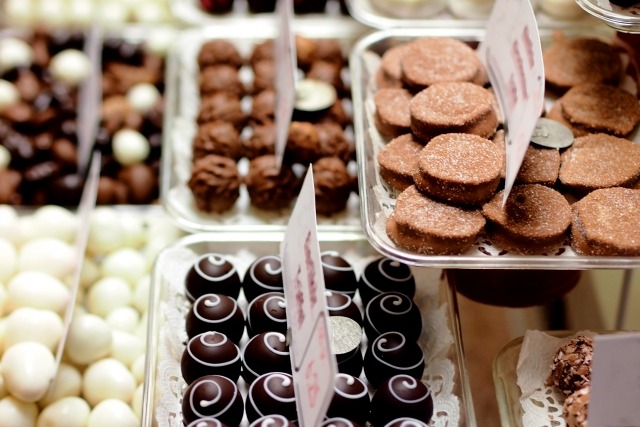
The best time to buy Valentine’s chocolates in Japan is from late January until February 14. You can find various kinds of chocolates at the following places.
- Department Store Valentine Fair
Special venues gather luxurious chocolates from domestic and international brands with tastings available. Elegant packaging makes them perfect souvenirs. - Convenience Stores
Affordable cute chocolates are readily available. There are many collaboration products with popular Japanese characters. - Supermarkets
Great for finding local, down-to-earth chocolates with a local vibe. Many products are suitable for Tomo chocolates or Giri chocolates. - Patisseries and Chocolateries
Chocolates crafted by local artisans like art are recommended. You can enjoy unique tastes and designs.
If your timing is right, visiting events such as "Chocolate Festivals" held in Kyoto or Tokyo will allow you to enjoy the culture even more deeply.
In Conclusion
Valentine's Day holds special significance as an annual event in Japan. The unique style of "women giving chocolates to men," different from the world, reflects a historical background and uniquely Japanese human relationships.
Furthermore, the diversity of chocolate types and ways of expressing not only romantic love but also gratitude, friendship, and self-affirmation is an intriguing point. In March, White Day as a "culture of reciprocation" exists, strongly emphasizing communication between giver and receiver.
If you visit Japan at this time, through the time picking chocolates, the designs at stores, and limited seasonal products, you can feel the Japanese essence within the Valentine’s event. Buying and enjoying is fine, and just browsing is too. This sweet cultural experience will surely remain in your travel memories.
Search Restaurants by Popular Cuisines