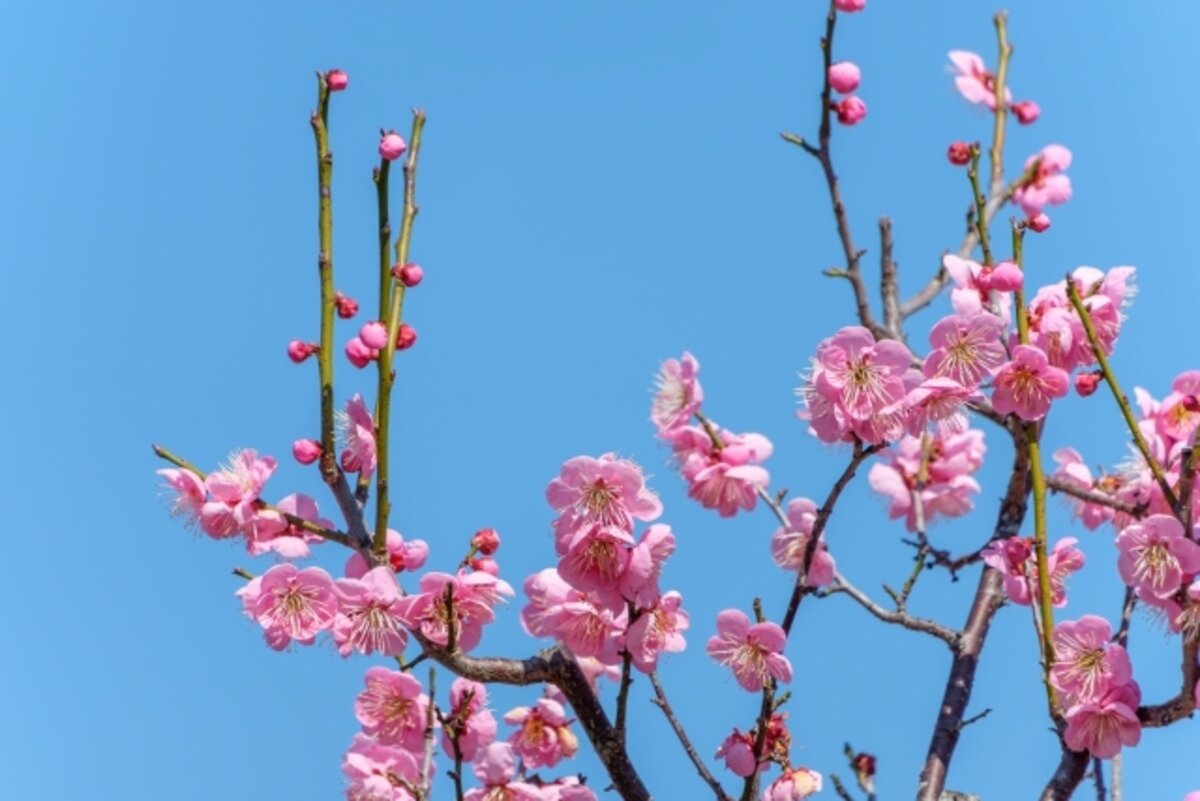
In the still chilly season, you may have once caught sight of small flowers blooming on street corners or within shrine grounds. They are flowers called "ume." Symbolizing early spring in Japan, these flowers begin to bloom after enduring the long and harsh winter, signaling "the beginning of spring" to the hearts of the Japanese people.
For visitors to Japan on sightseeing trips, cherry blossoms might be well-known, but in fact, ume blossoms blooms earlier than cherry blossoms and is deeply rooted in the daily life, faith, and food culture of Japanese people.
This article will fully introduce ume blossoms, including its characteristics, blooming period, beautiful famous spots, and its relationship with food culture. By learning about the "scenery with ume blossoms" deeply embedded in Japanese life, not just enjoying the flowers, you can feel the culture of Japan even more strongly.
1. What is Ume Blossoms?
Ume blossoms is a plant belonging to the Rosaceae family and the Prunus genus, a deciduous tall tree originally from China. Its scientific name is "Prunus mume." It is said to have been introduced to Japan from China during the Nara period, blending into the Japanese climate and continuing to be loved both as an ornamental and edible plant.
In Japanese, it is read as "ume," but the kanji "梅" is also used in China and similarly cherished as a symbol of spring. In Japan, especially as a plant signaling the arrival of spring, it has frequently appeared in waka poetry, paintings, tea ceremony, and literary works since ancient times.
The blooming period is from the end of January to early March, earlier than cherry blossoms. Therefore, it is said that "to see ume blossoms is to get ahead of spring."
2. Characteristics and Appeal of Ume Blossoms
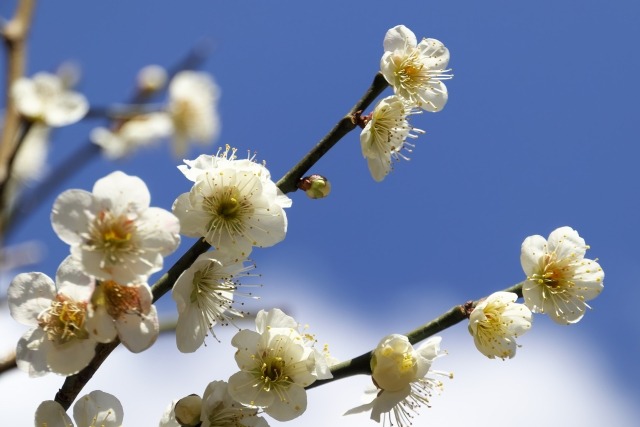
Ume blossoms grow about 5 to 10 meters tall with branches spreading somewhat irregularly. They swell buds while enduring winter's cold and begin blooming gradually around February when temperatures mellow.
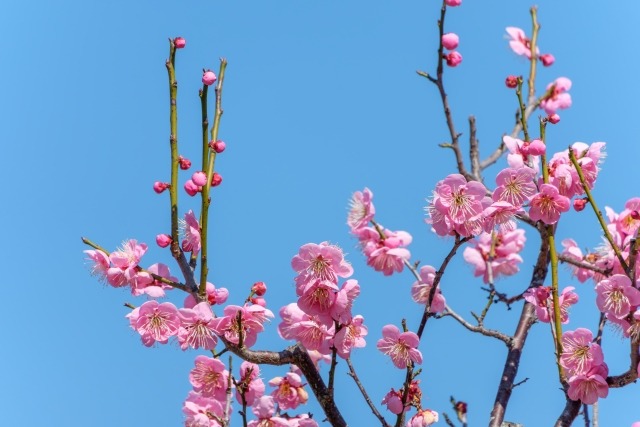
The flowers are about 2–3 cm in diameter with a rich variety of colors including white, pale pink, and deep crimson. The petals are rounded and bloom spreading towards the center. The fragrance is stronger than cherry blossoms, releasing a sweet and elegant scent. Many people notice the fragrance even before seeing the flowers.
There are many varieties, including "hanaume" for ornamental use and "miume" bearing edible fruit, classified according to their usage. Also, even within the same variety, there are early blooming types and late blooming types, allowing enjoyment of flowers over a long period.
Ume blossoms are easy to cultivate and popular as garden trees. Their beauty of flowers and high utility of fruit make them valued as plants to enjoy throughout the year.

3. Best Time to See Ume Blossoms
The flowering period of ume blossoms varies slightly depending on region and variety but generally ranges from late January to early March. In southern regions like Okinawa, they may bloom in January, while in northern Kanto and Tohoku regions, full bloom can occur after mid-March.
In tourist cities such as Tokyo, Kyoto, and Osaka, mid to late February is regarded as the most beautiful period. Although cold still lingers in this season, many people visit parks and shrines to see the ume blossoms.
Because of early, mid, and late blooming varieties, flowers can be enjoyed over several weeks even at a single location. During the best viewing period, events like "Ume Matsuri" (Ume festivals) are held, where visitors can also enjoy food stalls, local performing arts, and sales of local specialty products.
4. Famous Spots to See Ume Blossoms
Ume blossoms can be appreciated throughout Japan, but here are some especially famous spots.
・Yushima Tenjin (Tokyo)
A shrine dedicated to Sugawara no Michizane, the deity of learning, where about 300 ume blossoms bloom profusely. Predominantly white ume blossoms create an elegant and pristine atmosphere. The "Ume Matsuri" is held from mid-February to early March, attracting many visitors. Food stalls and dedication performances within the shrine grounds are highlights.
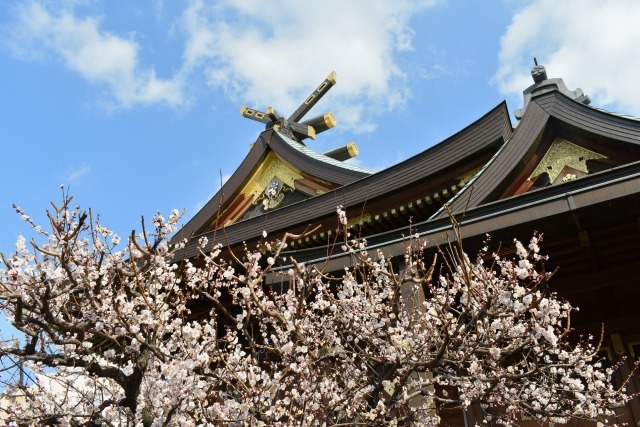
・Koishikawa Korakuen (Tokyo)
Known as a daimyo garden from the Edo period, you can enjoy ume blossoms in the beautiful Japanese garden featuring ponds, bridges, and hills. Ume blossoms blooming in the quiet setting have charm, with the contrast of red and white ume blossoms particularly praised as beautiful.
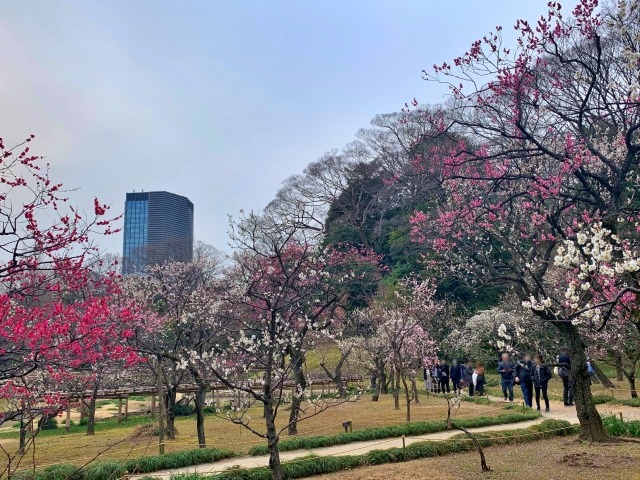
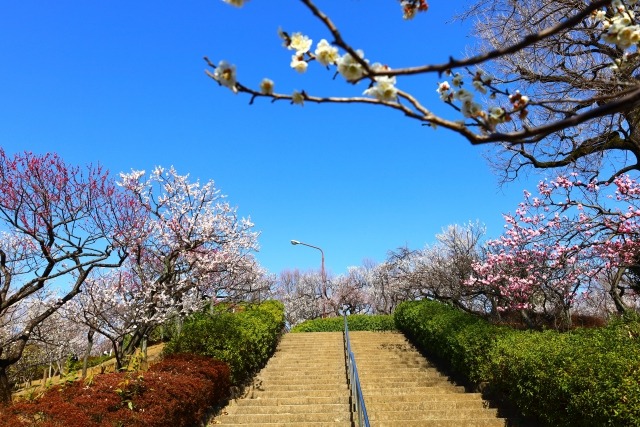
・Ikegami Baien (Tokyo)
Located in Ota Ward, Tokyo, this ume blossoms garden's unique landscape utilizes the hilly terrain. About 370 trees and more than 30 varieties are planted, allowing long enjoyment from early to late blooming. The view from the stairs and slopes looking down over the ume blossoms is also highly photogenic.
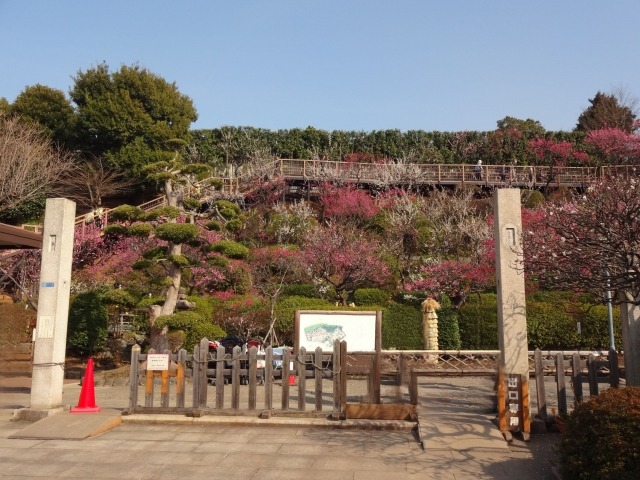
・Hanegi Park (Tokyo)
A vast park in Setagaya Ward where about 650 ume blossoms are planted. It is one of the largest ume blossoms spots in Tokyo, hosting the "Setagaya Ume Matsuri" in February, bustling with locals and tourists alike. It is a rare place where many varieties of ume blossoms can be enjoyed at once.
・Osaka Castle Park (Osaka)
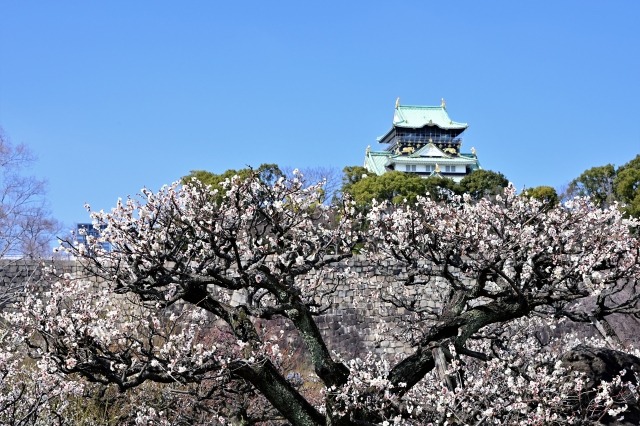
With about 1,200 ume blossoms blooming against the background of the castle tower, the ume blossoms grove at Osaka Castle Park is a popular spot among tourists. Red and white ume blossoms are planted in a balanced manner, creating a magnificent contrast with the historic castle. A scenery irresistible for photography lovers unfolds.
・Kitano Tenmangu (Kyoto)
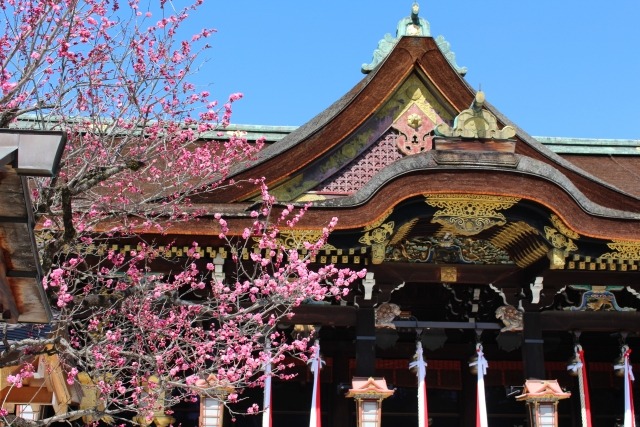
This is also a shrine dedicated to Sugawara no Michizane, the deity of learning. About 1,500 ume blossoms are planted here, and it is widely known as a "famous ume blossoms place." The shrine grounds are enveloped in the scent of ume blossoms, and the harmony with historical buildings makes it a very beautiful place.
・Dazaifu Tenmangu (Fukuoka)
A representative tourist destination in Fukuoka, also famous as an ume blossoms place. About 6,000 ume blossoms are planted, including a legendary tree called "Tobiume." It is a place where you can enjoy ume blossoms while sightseeing, making it a two-for-one spot.

5. The Connection Between Ume Blossoms and Japanese Culture
Ume blossoms has long been treated as a special presence in Japanese culture.
First, it frequently appears in literary works such as waka and haiku. In the "Manyoshu," more poems praise ume blossoms than cherry blossoms, revealing that at that time "spring meant ume blossoms."
In the tea ceremony world, ume blossoms branches are sometimes displayed in the alcove (tokonoma). Ume blossoms is regarded as a symbol of "endurance" and "purity," and its figure blooming through the cold winter overlaps with the spirit of wabi-sabi.
At shrines, because Sugawara no Michizane liked ume blossoms, many ume blossoms are planted at Tenmangu shrines, and the flower is also called "flower of learning." During the exam season, many students can be seen praying for success on shrine grounds blooming with ume blossoms.
Moreover, ume blossoms is often used in family crests, kimono patterns, and wagashi, and is beloved as a symbol of visual beauty.
6. Ume as Food
Not only ume flowers but also ume fruit are deeply involved in Japanese food culture.
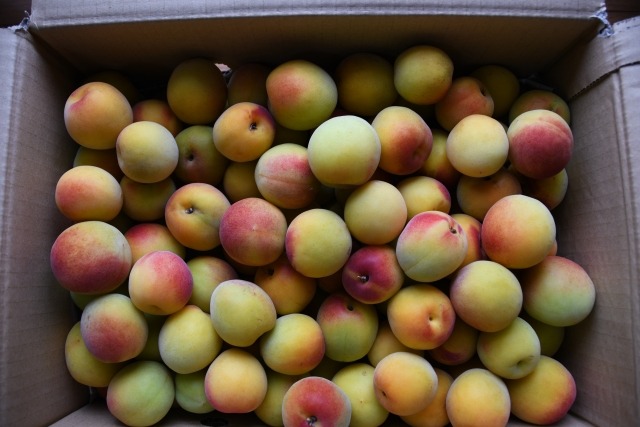
Ume fruit is harvested from May to June and processed while still green and hard. Its distinctive sourness and aroma suit the Japanese palate well and are used in various foods.
Edible ume is called "miume," and depending on the variety, the sourness or softness of the flesh is adapted to different uses.
As an ingredient, ume is highly preservable and expected to have medicinal effects, so it has long been cherished in households. Especially "umeboshi," "umeshu," and "ume syrup" are iconic Japanese processed ume products.
7. How to Eat Ume Fruit
Here, we introduce three representative foods and drinks made from ume fruit.
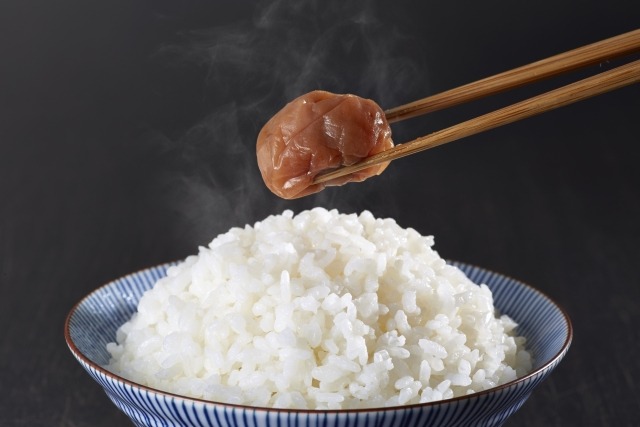
・Umeboshi
A traditional food indispensable on Japanese dining tables. Umeboshi is made by salt-pickling ume and sun-drying them. It features a strong sour and salty taste. It is a classic ingredient in rice balls and lunchboxes, and because of its strong antibacterial properties, it has been valued as a preserved food.
Umeboshi contains a lot of citric acid and is said to help with recovery from fatigue and appetite stimulation. There are regional differences in production methods in Japan, and there are many varieties such as sweetened "honey ume" and extremely salty "traditional umeboshi."
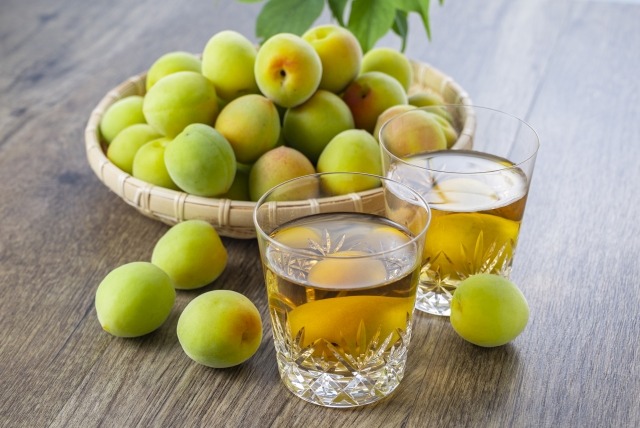
・Umeshu
A Japanese homemade liquor made using green ume, rock sugar, and shochu. The making process is simple, and many people make it at home. Aging deepens the flavor, producing a sweet and sour taste with a faint alcoholic feel.
The alcohol content is somewhat high, and it is commonly drunk mixed with soda or water or served on the rocks. It is also popular as an aperitif. Recently, specialty umeshu bars have appeared, attracting attention domestically and internationally.
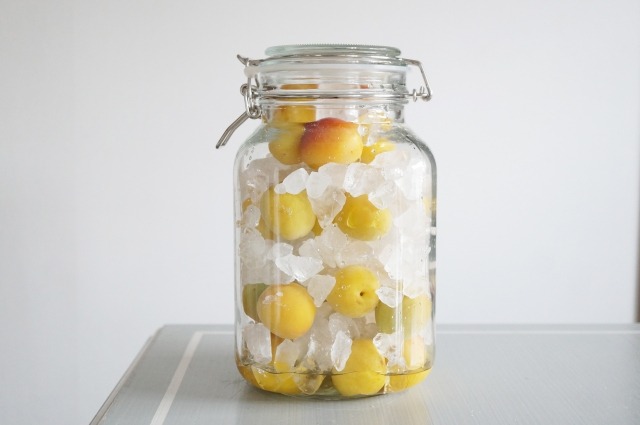
・Ume Syrup
A non-alcoholic syrup drink made by soaking ume and sugar together. When diluted with water or soda, it spreads a refreshing taste, perfect for hot summer days.
Even those who dislike alcohol can enjoy it, and it is popular with a wide range of people from children to adults. It tastes good cold or warm and is cherished as a gentle, natural sweetness for the body.
In Conclusion
Japanese ume blossoms is not just a plant with beautiful flowers. Its blossoms announce the arrival of spring, light a beacon of hope in people's hearts, and the figure blooming amid severe cold also carries spiritual meanings such as "endurance" and "nobility."
Furthermore, the scent of ume blossoms soothes the heart, and the scenery of ume blossoms at shrines and gardens evokes Japan’s characteristic tranquility and beauty.
Moreover, ume fruit has supported the Japanese diet for a long time. Processed products like umeboshi, umeshu, and ume syrup have distinct flavors and benefits and are rooted as household tastes.
Thus, ume blossom is deeply embedded in Japanese culture. As a flower, as food, and as a spiritual symbol, it continues to live within Japanese life.
If you visit Japan between February and March, be sure to visit some ume blossoms famous spot. Spending a moment quietly viewing blooming ume blossoms and feeling the start of spring in Japan will surely become a special memory.
Search Restaurants by Popular Cuisines